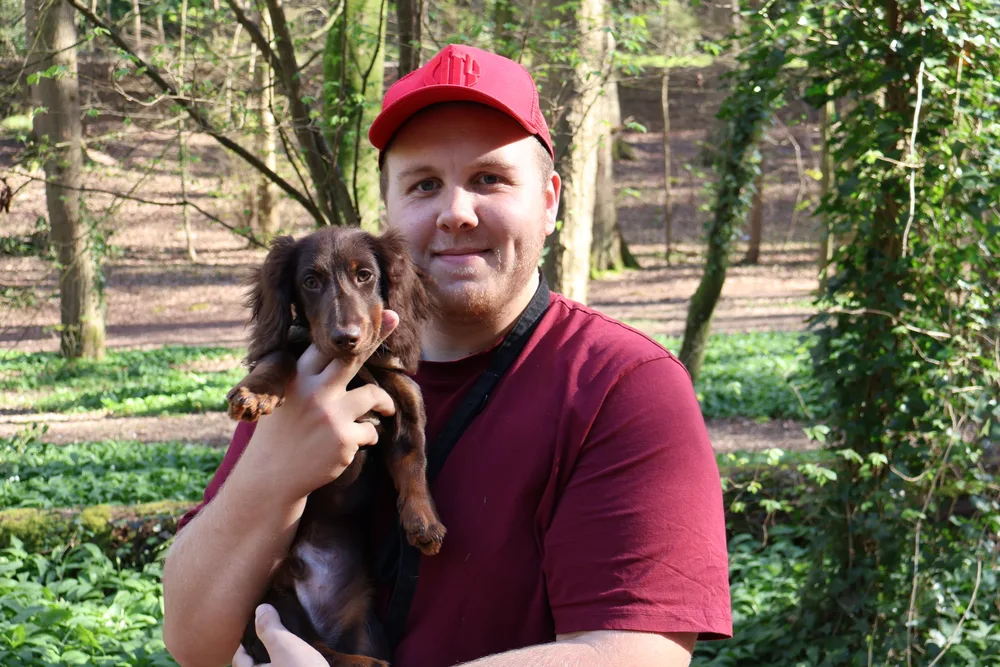


Bristol-based photographer Lewis Pritchard treats tiny LEGO minifigures like actors on a cinematic set, using natural light and outdoor landscapes to transform plastic toys into living, breathing stories. Driven by film inspiration, nostalgia, and emotional narrative, he captures the subtle drama and humor of his characters by shooting entirely at their eye level. His work proves that compelling, large-scale storytelling doesn't require high-end studio gear—only a fresh perspective and a bit of patience in your own backyard.
For many of us, LEGO is just a box of plastic bricks sitting on a shelf or tucked away in some forgotten closet. We build the set, display it for a while, and eventually move on to the next one. But for Lewis Pritchard, those plastic pieces are a way to tell stories that feel larger than life.
Based in Bristol, England, Lewis balances a busy life. He works full-time training delivery drivers and spends his weekends coaching children’s football. Yet, when the workday ends or the weekend arrives, he makes sure to grab his camera and a handful of minifigures. The goal is to turn everyday, mundane settings into cinematic, breathing scenes.
Lewis is the first guest in our new series, ‘Brick Click,’ where we explore the minds behind the lens of the LEGO photography community. His work proves that capturing the imagination doesn’t require a Hollywood studio. It requires nothing more than an eye for character, a bit of patience, and the willingness to get down on the ground, often literally, to see the world from a brand new perspective.
Quickfire: Lewis’s Photography Style
-
Primary Setting: Outdoor nature
-
Subject Focus: Minifigure-focused
-
Creative Block Cure: A walk through nature
Starting with a Scene
Lewis’s entry into the world of brick photography wasn’t born of a grand plan. He was just another LEGO fan geeking out over sets on display. “Whenever I saw a scene in a film that a LEGO set is based on, I just thought it would be cool to try and recreate that scene in LEGO,” says the photographer.
His spark turned into a flame when he bought the Fast & Furious Skyline set. A casual experiment turned into a genuine passion when Lewis looked at the brick car and thought it would be fun to take a few pictures of it. He never stopped after that.
Perhaps it’s a common trajectory for many brick photographers, but Lewis brings a unique energy to it. Although he isn’t the type to obsess over technical perfection at the expense of fun, he treats his figures like actors on a set and wants his viewers to forget they’re looking at small plastic toys.
Before every shoot, he likes to jot down a list of photo ideas, selecting the right minifigures to match a comic book scene or a specific movie moment he wants to recreate. He keeps that reference on hand to make sure he gets the details right. Yet, Lewis also loves the spontaneity of taking his camera out on a dog walk.
He’ll look through his collection of minifigures, pick out a few, and head into nature to see if he can find the right spot to match their vibe. This is how he finds new locations: by walking, traveling, and constantly trying to match an environment to a minifigure he wants to use.
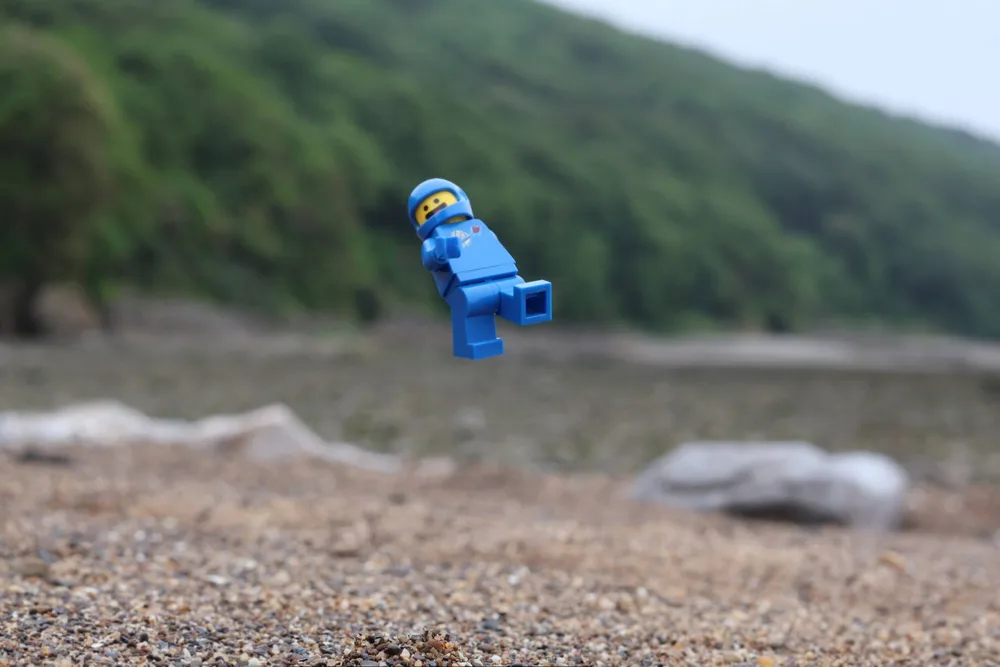
When asked about his influences, Lewis points to the silver screen. “My biggest inspiration comes from films and TV shows,” he says. He also credits the wider community for his momentum, specifically citing toy photographer Bryan Moshiem. “Seeing what he achieves as someone else in his 20s has been a huge inspiration,” says Lewis.
The Gear and the Struggle
You might think that professional photography requires a massive studio setup, lights, and expensive rigs. Lewis keeps it simple.
His creative process is a fluid, three-pronged approach: scout a location in nature, deconstruct LEGO sets to focus on specific angles and hidden easter eggs, or utilize everyday household items to simulate environments (such as water, blue card and a clear tub to make the effect of being in the sea).
The photographer focuses heavily on the minifigures as his primary subjects and finds that a simple walk through the woods is the ultimate remedy when he hits a creative block. He relies on his 50mm Canon lens for that shallow depth of field that makes his minifigures pop against the blurriest background. He admits that he has his eyes on an 85mm lens, but for now, his current gear does the trick.
Getting a clear focus on the character is difficult, so the camera and lighting do play an important role. But Lewis believes the real challenge in shooting at such a small scale — especially outdoors — is the wind. “The patience required to set up a figure, get the camera in position and focus, just for the figure to blow over can be very frustrating,” he admits.
The photographer has learned that shooting outdoors comes with its own set of rules. He swears by Blu-Tack to keep his subjects upright, especially when he is trying to balance them on tricky surfaces like moss or uneven ground. He suggests it as a must-have for anyone starting out.
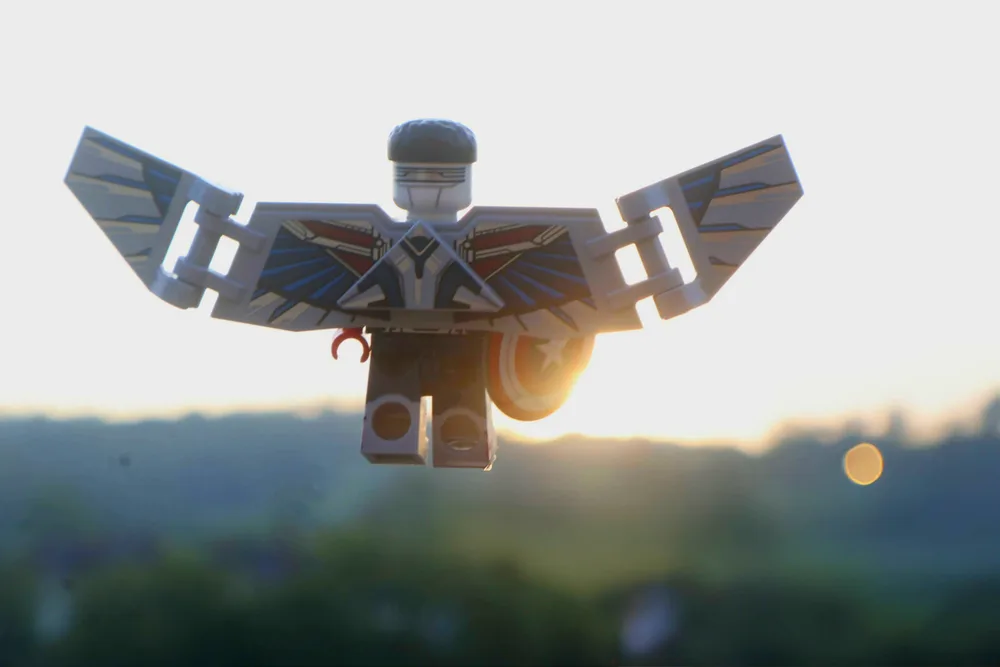
When it comes to lighting, Lewis prefers to stick to the sun. He wants his photos to feel as natural as possible, as if the minifigures are actually living in the space he’s created. He enjoys the natural look that sunlight provides, even if it makes things harder to manage.
“Sometimes if the light is too much it can be difficult to make a photo look nice without heavy editing,” Lewis says. If he’s stuck inside or needs a specific color pop to make a scene stand out, he makes do with what he has, such as using his phone’s flashlight to get the job done. It’s a humble setup, but he makes it work because he focuses on the shot rather than the gear.
Why LEGO?
What keeps Lewis coming back to these plastic bricks and minifigures as a medium for photography? It’s the emotion. “LEGO has been my biggest passion for as long as I can remember, and I’ve always loved minifigures the most,” he says.
Apart from the dose of nostalgia that LEGO injects, the photographer finds it fascinating that a tiny plastic face can convey sadness, anger, or triumph with just the right angle and lighting. Indeed, minifigures often have comical, simple expressions, but through the lens of a camera, they can look surprisingly dramatic.
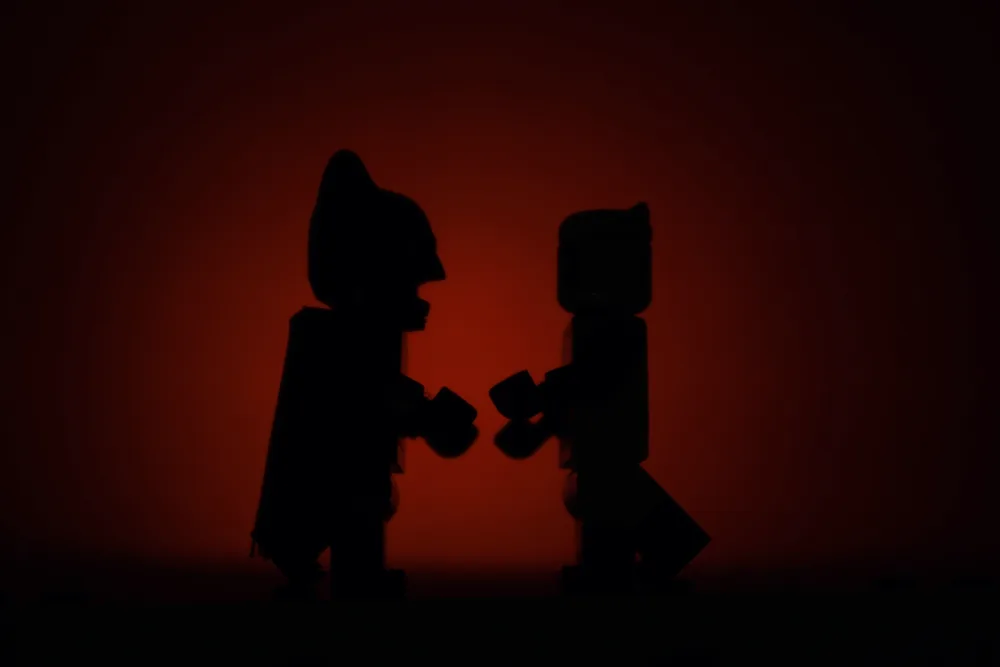
Lewis loves using multiple minifigures in a single shot because it allows for more complex storytelling. When he uses licensed characters, he already has a built-in backstory to work with, which he believes makes the process much easier.
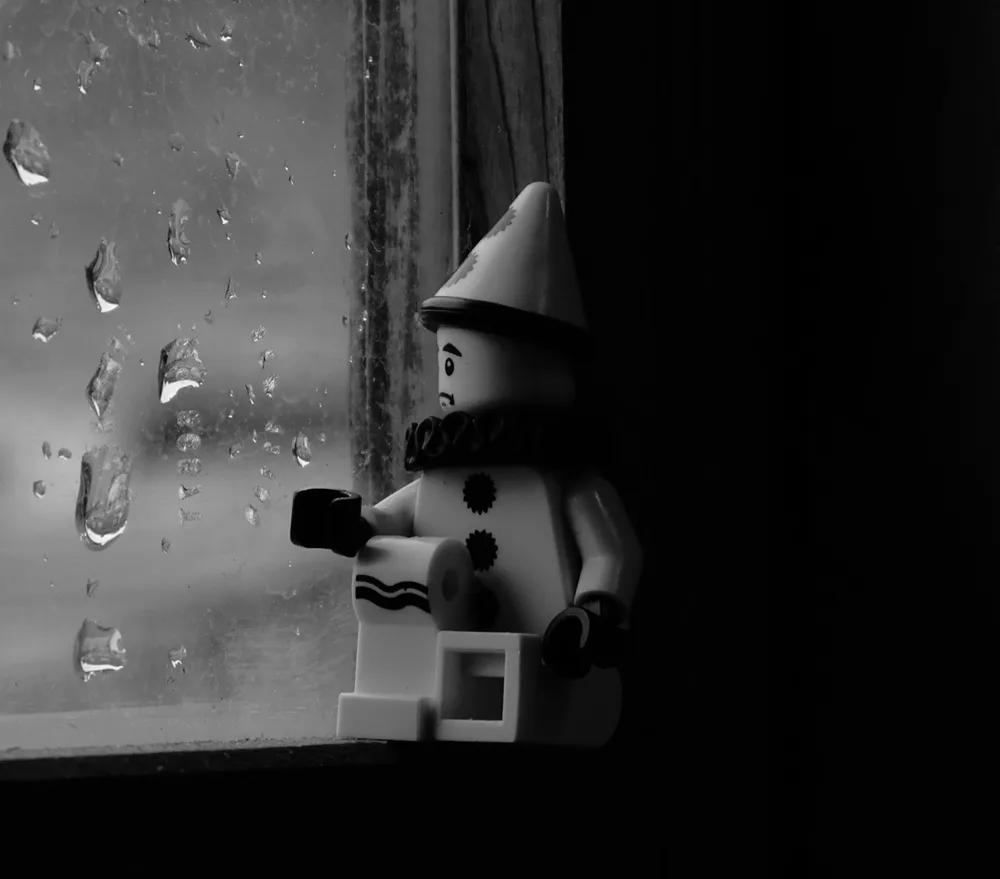
By contrast, he also enjoys challenging himself with non-licensed characters, like the one in his popular “Sad Clown” photo. In those instances, he has to rely on specific facial expressions and colors to set the tone. Even if the audience doesn’t know the story behind the clown, the mood is clear.
Lewis also notes that music plays a huge role in his process. When he shares his work on Instagram and TikTok, choosing the right song helps bridge the gap between a static plastic figure and a living, breathing character. The audio helps the viewer feel exactly what he intended the character to feel.
His favorite subjects are minifigures that allow for a narrative, such as the Mandalorian and Grogu. For him, those two are perfect because they represent something relatable, like a father and son out for a day at the donut van — exactly the kind of irony and humor he tries to capture.
He says he could use them as photo props for the rest of his life. “The Mandalorian helmet is so iconic,” Lewis adds, “and the character can be shot in so many different locations.”
Stories Behind Lewis Pritchard’s Brick Clicks
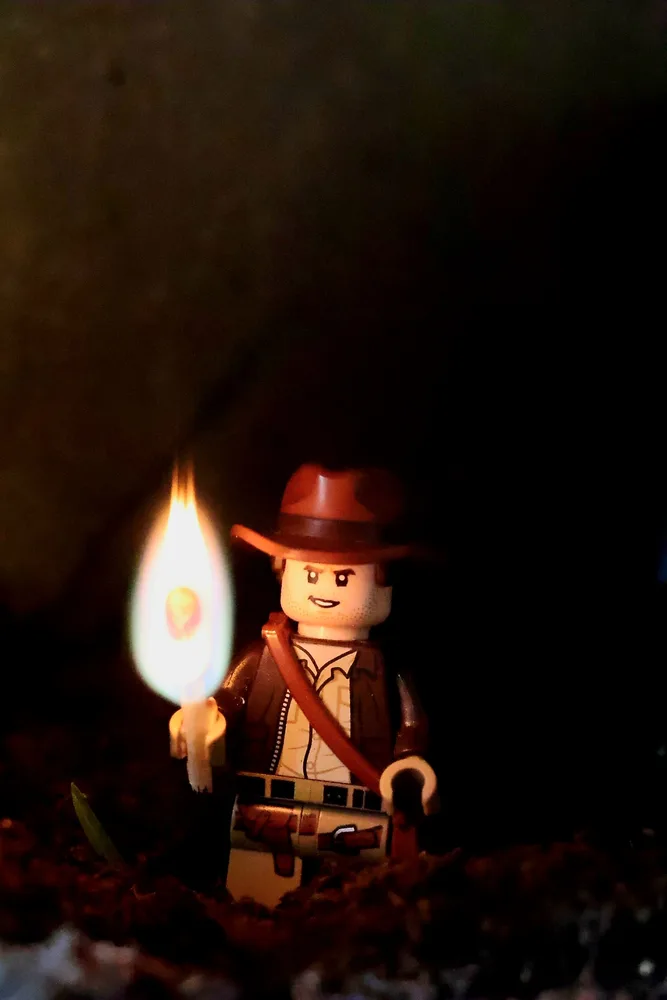
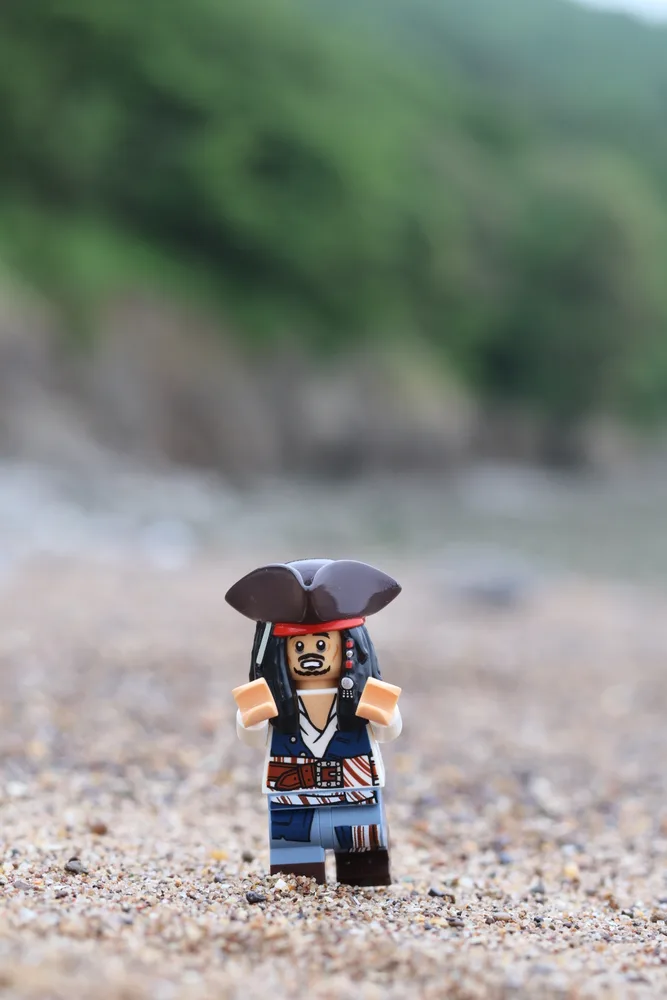
Lewis has a few photos that stand out to him, and they all have different backstories. He is particularly proud of his Indiana Jones Matchstick picture, his Sad Clown, and his Jack Sparrow Running on the Beach — with a unique reason behind the fondness for each click.
The Indiana Jones photo was his first real attempt at using practical effects to improve a shot. He felt like he finally got the lighting right, and it beautifully captured that gritty, adventurous feeling that defined the Indiana Jones movies. It was a breakthrough moment for him because it showed him how much he could do with simple props and a bit of creativity.
The Jack Sparrow photo happened on a day when Lewis felt like he wasn’t taking very good pictures. He was frustrated with his progress, but then managed to capture the shot of Jack running, and it just clicked. It was similar to the scene he was trying to recreate, and he found genuine humor in the result. It was a reminder for him that you can have a bad day and still come away with a photo you are proud of.
The Sad Clown photo is his most popular click. Just like the Jack Sparrow photo, he was having a tough time with his creativity that day, and that frustration might have actually made the photo better. It meant a lot to him because it resonated with so many other people. It showed him that his work could connect with others on an emotional level, even if the subject was just a small toy.
Advice for the New Photographers
If you are just getting started, Lewis has two simple pieces of advice that he wishes he had known when he first picked up a camera: Get closer and tell a good story.
Newbie brick photographers usually shoot from too far away or from a standing angle, looking down at the minifigures. Lewis suggests getting down to the eye level of the minifigure.
“Treat the toy like a real person, and you will see the realism in your shots improve immediately,” he says. He believes, by getting closer, you also solve the problem of the background looking too large; it makes the figure feel like they belong in the scene rather than just sitting on top of it.
Also, it’s easy to just set a minifigure as a stationary character in front of a cool background. But the photos that really work are the ones where something is actually happening. If you want a photo to be memorable, Lewis believes you have to create a sense of action or emotion. Something needs to be happening, even if it is just a subtle glance between two minifigures or one interacting with their environment.
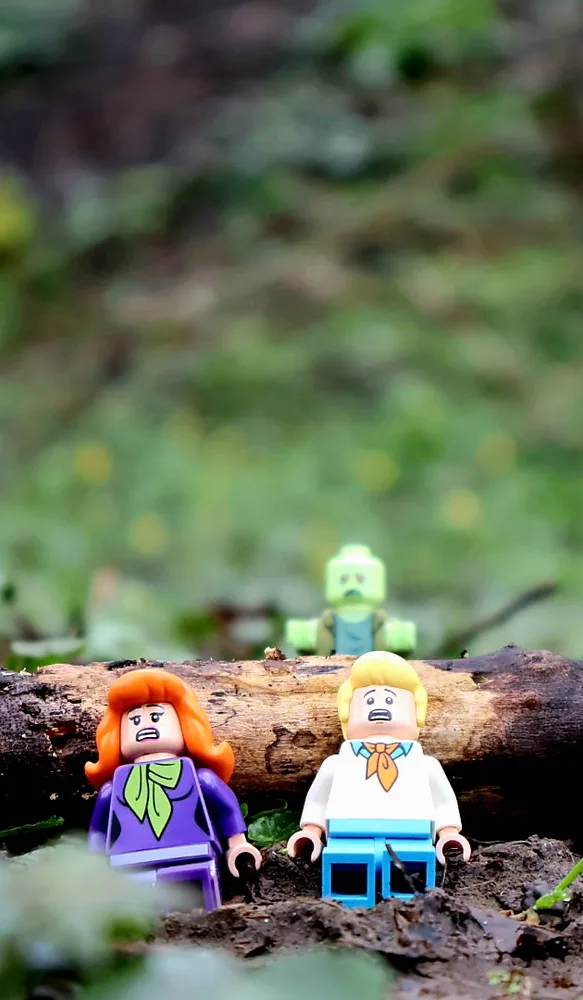
The photographer hopes that when people scroll past his work, they feel a quick spark of humor or a wave of nostalgia for the movies they grew up with. He wants people to see a Scooby-Doo photo and instantly remember watching that episode as a kid, feeling the same enjoyment they did back then.
The Takeaway
LEGO photographer Lewis Pritchard’s journey shows us that brick photography is a lot about observation and small-scale storytelling. It’s about taking the time to notice how the light hits a piece of moss, how a minifigure looks against a blurred tree, or how a tiny accessory can turn a random photo into a story.
If you’ve ever felt like you wanted to try this yourself but were worried about not having the right camera or the right set, let Lewis’s journey be your encouragement. His work will remind you that you do not need expensive gear or a huge setup to be creative. All you need is a minifigure or two, a bit of patience, and the ability to see a story in your own backyard.
As he balances a demanding life as a driver trainer and a football coach, Lewis further proves that we can all carve out time for the things that excite us, no matter how busy our schedules become.
Start with what you have. Find a character that makes you laugh. Take them outside. Get down on the ground, find their eye level, and see if you can capture just one moment of their life. You might find that the biggest stories are actually the ones hiding in plain sight, waiting for the right person to come along and take a picture.
We at Bricksly are incredibly grateful to Lewis for opening up about his process, struggles, techniques, and love for the characters that drive his photography. As we kick off our series ‘Brick Click’ with this amazing photographer, we’re also excited to keep this momentum going.
If you have any favorite toy photographers you would like us to feature in the coming weeks, let us know! We want this series to be a community project where we can all learn from one another and appreciate the sheer amount of work that goes into every single frame. The goal is to pull back the curtain on how these photos come to be and the moments of joy that come with turning plastic bricks into art through the lens of a camera.