


Taiwanese MOCist Chu Chia An approaches LEGO building through the lens of analytical philosophy, prioritizing dense, rich detail over sheer volume. Operating from his living room rug under the strict, unglued constraints of the classic system, he maps out complex narratives on a deliberate minifigure scale inspired by the atmospheric aesthetics of Dark Souls and Warhammer 40K. By treating every connection point as an intellectual exercise, Chu proves that compelling storytelling doesn't require thousands of bricks—only an eye for the hidden potential within a single element.
In the LEGO world, most builders often rush toward the massive — the biggest sets, the most complex technic builds, displays that fill entire rooms. Meanwhile, In the small island nation of Taiwan, LEGO MOC artist Chu Chia An (@phiphibrick on Instagram) has chosen a quieter, more rigorous path.
For Chu, the most rewarding creative breakthroughs happen on a much smaller scale. He’s out there to prove that you do not need thousands of pieces to tell a compelling story. You only need to have an eye for detail and the willingness to explore the potential of every single brick.
Discovering the Medium
Chu’s journey into the hobby started only recently in 2025, sparked by a discovery on Instagram. Finding a community of creators dedicated to the art of the minifigure-scale build shifted his entire perspective. He figured that the humble LEGO minifigure isn’t just an accessory for larger structures; it could very well be the heart of a build — a creative medium in its own right!
Until then, it had never crossed his mind that such small figures could anchor complex, creative projects. This very discovery eventually pushed him to start creating his own minifigure LEGO MOCs in June 2025. Alongside, he drew heavy inspiration from the dense, atmospheric visuals in games like Bloodborne, Dark Souls, and Elden Ring, and began translating their aesthetics into pieces of brick art.
Of course, the artist is quick to emphasize that he did not reach these creative breakthroughs in isolation. Chu attributes much of his growth to the minifigure-scale community, noting that many of his foundational building techniques were learned directly from his peers. Since a significant portion of the community are fellow Soulsborne fans, this shared passion provided the exact encouragement he needed to continue his brick-building journey.
“Without the amazing work of these minifigure creators, I wouldn’t be where I am today,” he acknowledges. Chu Chia An further believes focusing on the smaller builds helps him keep his projects grounded in a human scale. This allows him to play with perspective and narrative in ways that larger builds sometimes miss.
The Living Room Studio
Chu’s brick-building sessions don’t require a dedicated workshop or professional-grade storage systems. He’s got no fancy studio, so his process is humble and grounded. He doesn’t have the luxury of sprawling tables, but does not seem to mind it either. His entire inventory lives in two toolboxes and a few sorting trays, occupying his living room rug.
“If there’s one ritual I must perform before building, it’s lining them up and cracking them open,” he says. And so he does. Chu lines every piece up before starting and packs them all away when he’s done. The boxes are restacked, and the living room returns to normal.
He describes himself as a “good kid” because he always cleans up his mess, keeping his space orderly and ready for the next project. This intentional cycle of setting up and breaking down keeps him focused. It forces him to be sure about every build session. There is no clutter, and there is no room for aimless work. When the tools come out, it’s time to build.
Thinking Through the Bricks
Perhaps the most unique aspect of Chu’s approach is that he doesn’t just build; he theorizes. By day, he works in popular philosophy education — writing books, giving public speeches, and teaching classes for a living. It isn’t difficult to understand why this analytical habit follows him to his art.
He believes that thinking about the philosophy behind building is a joy in itself. It might not always help him put one brick on top of another, but it helps him understand why he builds in the first place. “Figuring out a concept feels just as great as discovering a useful building technique,” he admits.
In other words, brick-building is an intellectual exercise for artist Chu Chia An that adds depth to his hobby. He isn’t just playing with plastic; he’s exploring how we perceive shape, context, and meaning through these tiny, interlocking pieces.
This philosopher-turned artist has even developed a theory within the Anglo-American analytical tradition to explain how LEGO creation fundamentally differs from other modeling hobbies like Gunpla. Chu uses philosophy of games and aesthetic theories to explore concepts and practices that matter to builders, such as NPU.
He sees this particular practice as a bridge between the physical bricks and the fictional world a brick artist wants to create. Builders who use tail pieces for monster bellies or plant elements for feathers are prime examples of this phenomenon.
Chu draws on the work of game theorist Jesper Juul to explain why this works. For instance, in the real world, a mohawk hairpiece is just a connection point. But in the fictional context of a Dark Souls build, that same piece can transform into a Mimic tongue.
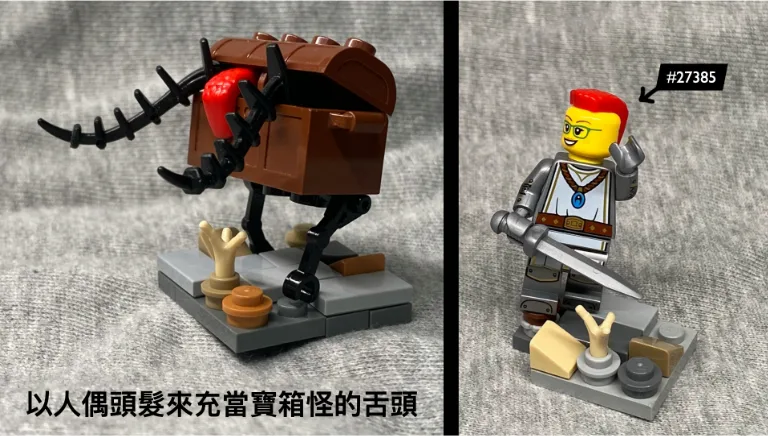
The physical properties of the part, such as its shape, weight, and color, remain the same, but the builder can leverage those traits to create new representational content. Once they’ve achieved a clever NPU, they have successfully stepped away from the part’s default identity to project something entirely new into their fictional world.
The Rules of the Game
Chu further treats his research as a way to understand the boundaries of his craft. He argues that LEGO operates under a specific ruleset that defines the hobby. Unlike other miniature modeling practices like Gunpla, where artists often cut, sand, paint, or use glue, the core LEGO ethos relies on the original clutch mechanism.
He views these self-imposed constraints as essential to the art and compares them to watching a magic trick or reading a detective novel. Part of the brilliance of a LEGO build is solving the puzzle of how it was held together. If an artist uses glue, that sense of wonder vanishes.
He suggests that LEGO creations function as prescriptive ontologies, meaning they are created and appreciated based on a shared understanding of these rules. By sticking to official, unmodified pieces, the builder challenges themselves to solve the puzzle using only the tools provided by the system.
Detail Over Volume
When asked about his style, Chu defined his priorities: detail over volume. Rather than trying to build bigger, he focuses on how much personality and recognizable detail he can pack into a tiny footprint when adding a part to a model.
This preference has its own set of trade-offs. His models are visually rich, dense, and highly detailed, but they are also harder to scale up. However, Chu is comfortable with this constraint as smaller builds force him to make every piece count. If you are building a massive structure, you can hide a mistake or a dull section. But in a minifigure-scale build, every single piece is visible. Every connection point matters.
This shows clearly in his character build, Sister Sui, which is inspired by the grim aesthetic of Warhammer 40K. This MOC stands as a testament to the economy of design. Chu spent just two hours on it and managed to create a figure complete with a custom gun featuring service medals and a skull-adorned torch holder even at such a small scale. He specifically mentions using 1x2 inverted brackets to build the gun.

This build made him realize that a character can be highly recognizable and interesting to look at with just a few parts. “I love it so much that it’s still on my shelf today,” he adds. He suggests that if you want to create something similar, you should focus on one feature at a time. You may find that you need fewer pieces than you think to capture the essence of what you are building.
The Mechanics of Design
MOC artist Chu Chia An also has a thing for mechanical builds. He’s a strong advocate for the 30375 Battle Droid Torso as a key component for such builds, and values its unique shape and high expandability. If he could have a lifetime supply of any one LEGO part, this would be it. “It’s the core component of many of my mecha builds,” he reveals.
Chu recently designed a universal LEGO Mech Frame that features a natural silhouette, 40 connection points, and superior articulation. He’s particularly proud of this build, and says it’s been a game-changer for his creative process, expanding his creative repertoire significantly. It serves as the foundation for his more ambitious projects and allows him to easily create all kinds of mecha builds.
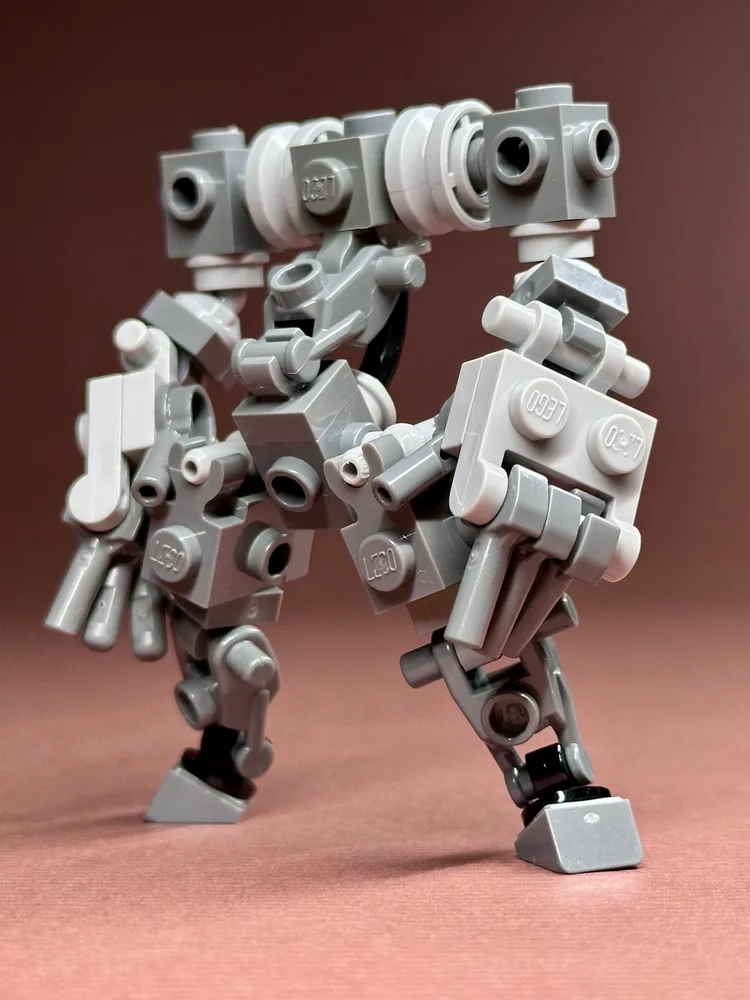
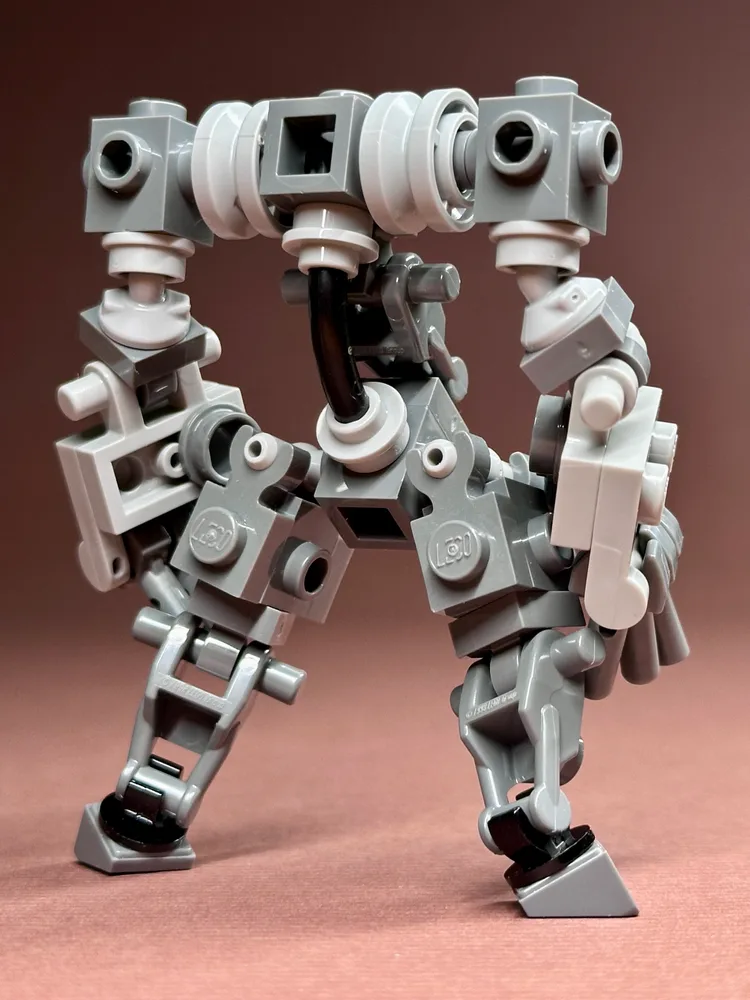
The Taiwanese artist challenged himself with this build because he wanted to test his creative limits with a transformable combiner later. In such a model, every part serves a dual purpose. This is a difficult task for any builder. You have to accommodate two distinct forms in one object. However, he learned that the abstract nature of LEGO bricks makes this easier than it sounds. His OBGRY models are the proof.
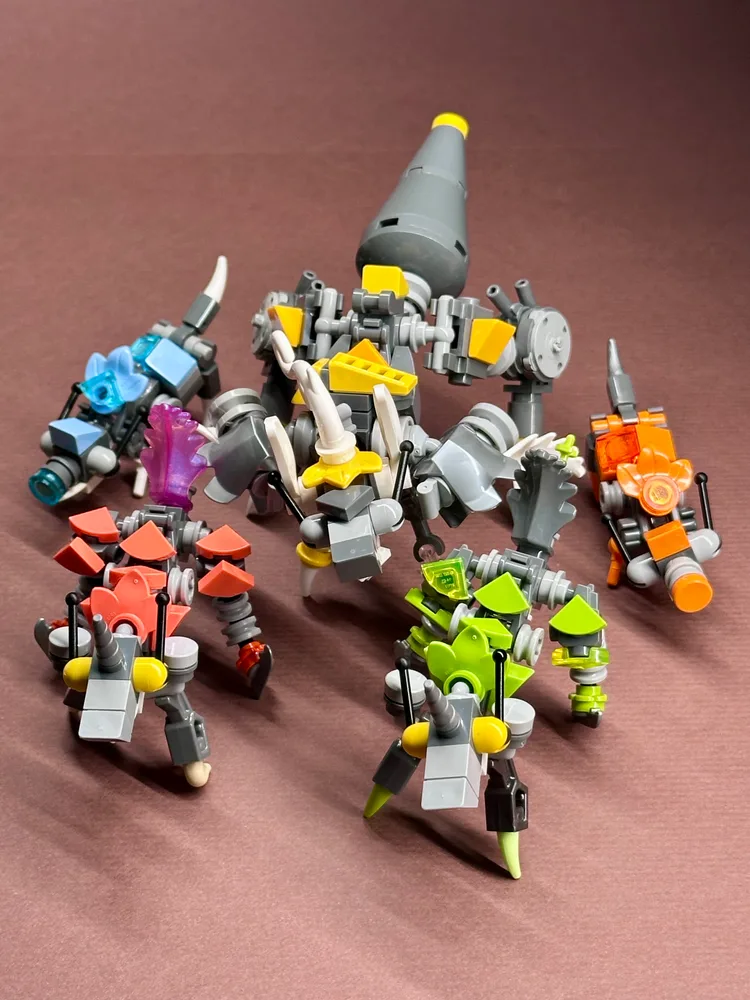
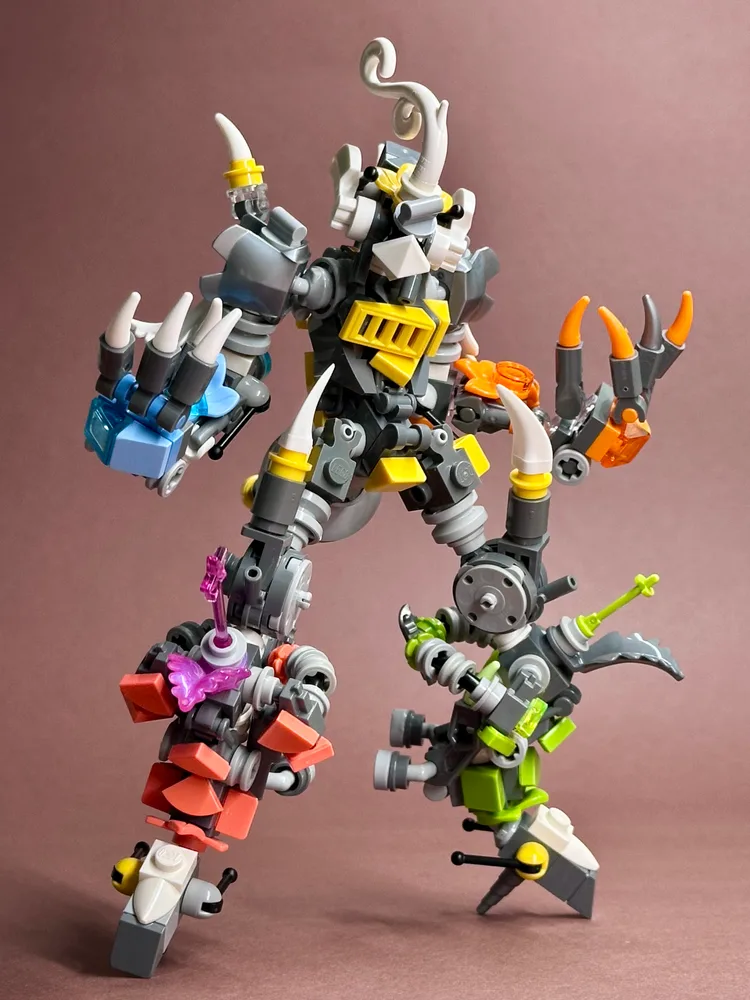
Chu further also thinks that viewers use their imagination to bridge gaps. If the creator provides the right context surrounding a part or section of the build, the human brain is more than happy to fill in the missing pieces. The viewer doesn’t need a perfect replica; they need just enough visual cues to see a build as what the creator intended it to be. This reliance on the viewer’s imagination is a hallmark of his style.
Advice for the Intimidated
LEGO enthusiasts often look at incredible MOCs online and feel intimidated. They think they need years of experience or a massive collection to get started. Chu Chia An disagrees.
His advice to new builders is to start small — with minifigure-scale models. They do not require many parts, and save time and space. They are also perfect for training your eye to notice fine details. Most importantly, such models are highly engaging on social media.
Furthermore, when you want to build something, he suggests deciding on your desired level of detail first. Then, start building at the smallest scale possible. This approach prevents you from becoming overwhelmed. It helps you manage your parts count and your time. It teaches you how to use specific parts in creative ways.

Finding Perspective
Chu Chia An’s perspective on the LEGO hobby is refreshing. He’s an artist who treats his art with the rigor of a philosopher. He’s a builder who thrives on limitations rather than abundance. He’s shown that the smallest scales can yield the biggest results.
His work reminds us that LEGO is more than just a toy. It’s an artist’s language. When we build, we are communicating ideas. We are translating the world around us, whether that is a gritty video game landscape or a mechanical design, into the medium of plastic bricks. We are asking the viewer to look closer. We are asking them to see the potential in a single 1x2 bracket or a battle droid torso.
Chu believes the secret to growth is sharing. This is why he shares his research, techniques, and instructions because he wants the community to flourish. The artist doesn’t hold his secrets close, inviting others to try his mech frame and critique his theories. This openness is what makes his work so inspiring.
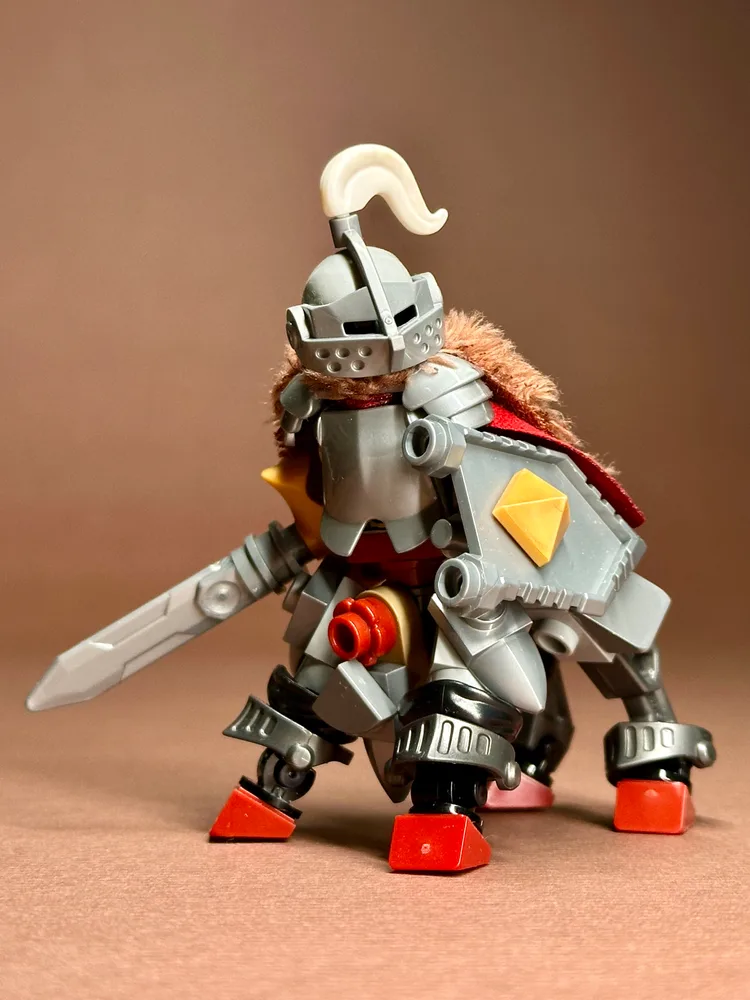
He also encourages us to look at the context of our builds and think about why we choose the parts we choose. Are we building just to fill space, or are we building to convey an idea? Are we relying on volume, or are we striving for detail? These are the questions that separate the hobbyist from the artist.
So, the next time you feel like your collection is too small or your space is too tight, remember Chu Chia An. Remember his two toolboxes and a living room rug. Remember that you can live a busy life as an educator, face the challenges of a small island nation, and still find time to sit down, clear off a spot on the floor, and create something beautiful.
Chu’s story is a chapter in a much larger book. It’s a testament to the power of focus. It’s a call to action for anyone who has ever looked at a pile of LEGO bricks and felt stuck: Don’t worry about the size of the set. Don’t worry about having the perfect studio. Start with a figure. Focus on the details. Think about the form. And most importantly, have fun with the process.
His journey is far from over. With every build, Chu learns something new. With every reflection, he finds a new way to describe the joy of creation. And we at Bricksly are lucky to be along for the ride.
By featuring him in our Art & Artist series, we hope to highlight not just his work, but the spirit of the entire brick-building community. We hope to inspire you to build something that is uniquely yours. At the end of the day, this is what every brick-builder dreams of. It’s the reason we keep building. It’s the reason we keep coming back to the bricks.