


For Haru Bonks, every mechanical monster and towering humanoid is a sanctuary built from the grounding language of structure, balancing the emotional weight of a demanding personal life with the sharp, analytical rigor of a failure engineer. His workshop is a playground of dark sci-fi horror and childhood nostalgia, where the rhythmic soundtrack of a new creation guides his hands to sculpt expressive faces and organic armor out of rigid plastic. Forgetting the intimidating summit of a finished masterpiece, Haru builds to lose himself in the climb—patiently locking brick into brick until a handful of loose parts tells a profound story of resilience, ingenuity, and quiet escape.
The clatter of toy plastic bricks is a sound that echoes through many childhoods. Yet for some, that very sound goes on to become a lifelong language of form and expression. This is also the story for MOC artist Haru Bonks.
Within the creator community that pushes the boundaries of what’s possible with LEGO bricks, this builder stands out as a visionary of the mechanical and the monstrous. Based in Taiwan, he approaches his collection not as a repository of playthings, but as a vast, modular vocabulary waiting to be arranged.
By day, Haru serves as a Failure Analysis Engineer, spending his hours dissecting why systems falter and tracing the path from a functional machine to a compromised one. This everyday analytical rigor — the habit of looking past the surface to understand structural integrity, internal stresses, and mechanics — is the same lens he uses when viewing his hobby.
We dare say that his act of creation is an extension of his professional life, which demands great attention to detail. When the workday concludes, Haru channels his skills into creating intricate, towering models that blur the line between toy and sculpture.
In the quiet corners of his workshop, he transforms standard brick components into complex builds, proving that the most compelling designs often stem from a thorough understanding of how parts hold, support, and interact with one another.
A Foundation Built on Bionicle and Persistence
Every great LEGO journey has a starting point. For Haru, that point was a gift from an uncle when he was just six years old: the LEGO 8536 Kopaka set from the Bionicle line. That initial spark ignited a fascination with construction and brick-building that has lasted decades.
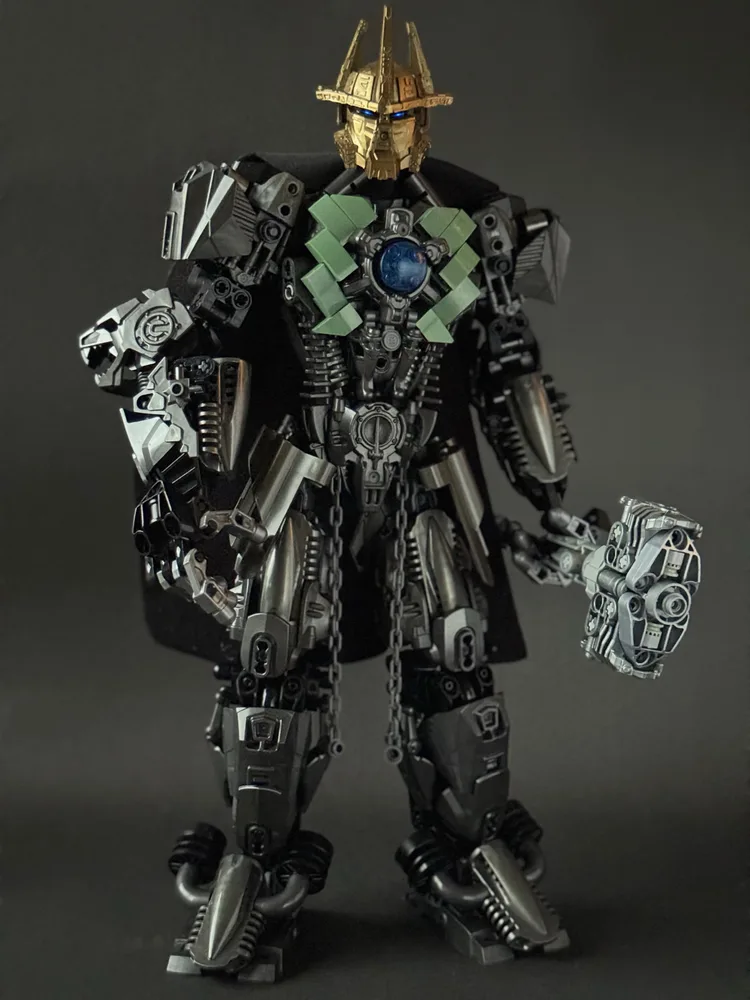
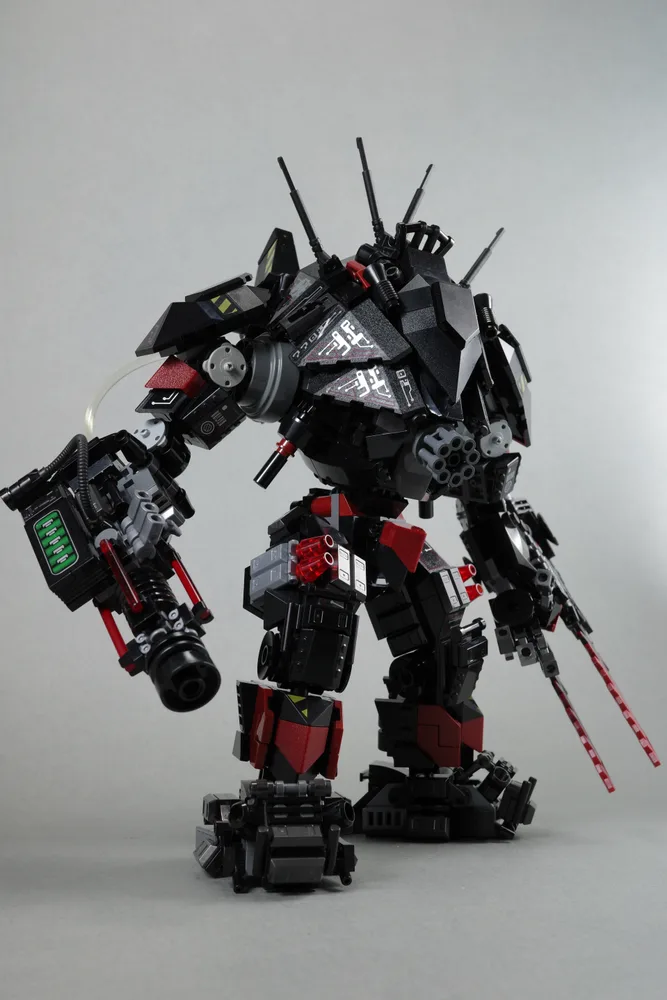
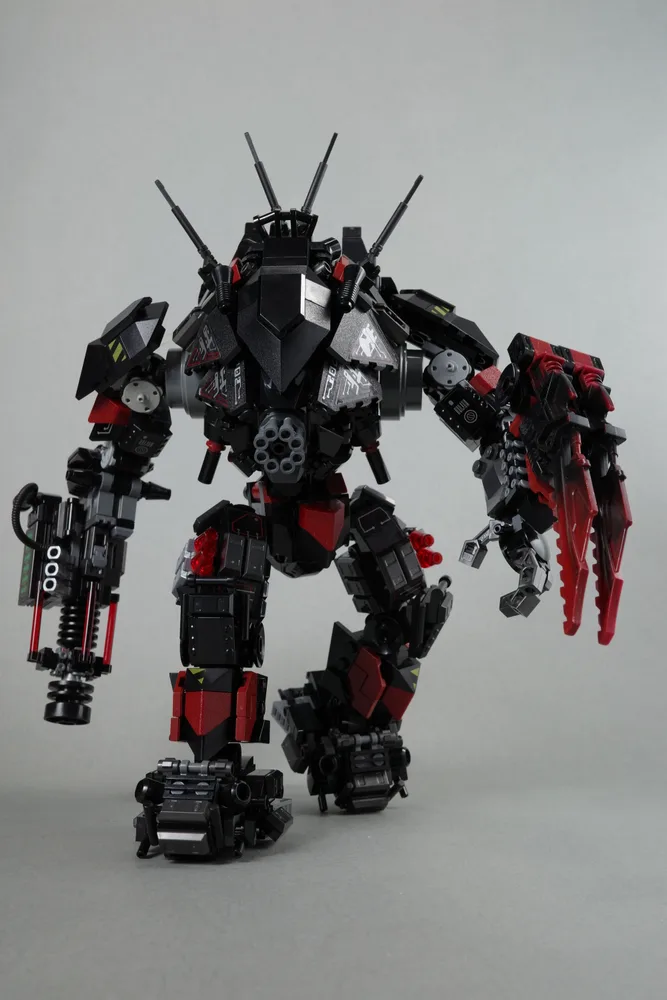
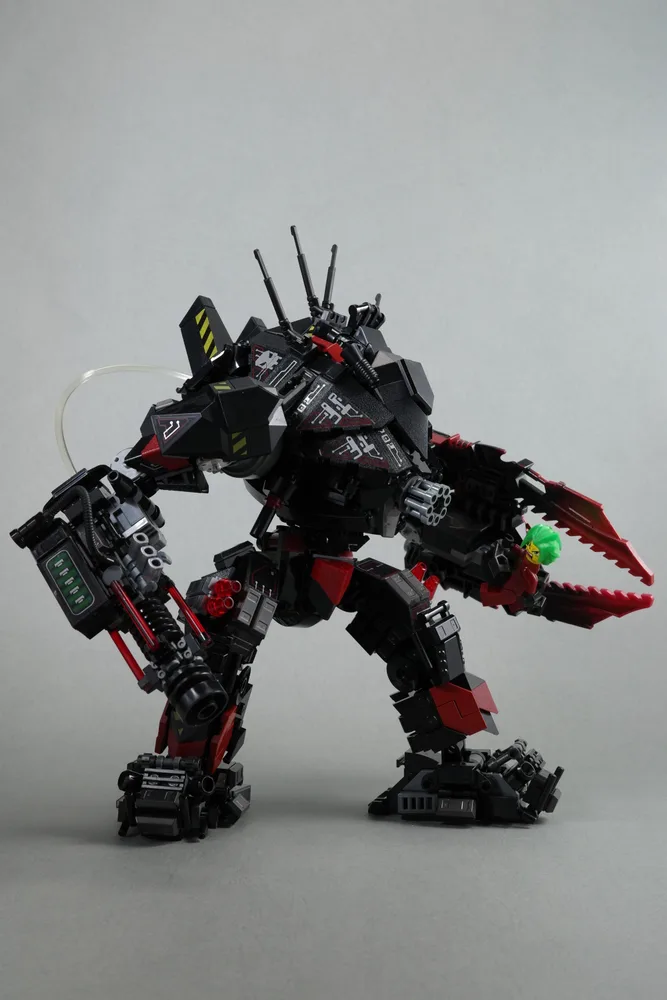
While many construction builders eventually move toward traditional minifigure-scale cityscapes or complex architecture, Haru finds himself perpetually drawn back to the aesthetics of Bionicle, mechs, and humanoid figures. These subjects represent more than just childhood nostalgia; they are the foundation of his design philosophy.
The transition from collecting sets and following official instructions to creating MOCs has been a natural evolution for him. In the early days of Bionicle, LEGO used to provide secondary instructions for combining multiple sets into one massive, formidable creature. Haru recalls spending his youth breaking down and rebuilding Rahkshi sets until the process became instinctive.
“As a kid, I was obsessed with combining and separating the three Rahkshi over and over again. Because of that, I can probably build a Rahkshi from memory today without instructions,” he says.
During his second year of building, when his collection of parts expanded, Haru converted his personal space into a workshop, investing heavily in storage drawers to house his growing inventory. This move was a turning point.
Organizing individual elements made it easier for him to find parts and fundamentally changed his creative process. It allowed him to see the potential of a build with greater clarity. “Having a well-organized collection completely changed my building process,” Haru admits.
The Sensory Ritual of Assembly
Brick-building for Haru is about relaxation and enjoyment. “It’s a bit like making toys for myself to play with,” says the artist. It’s also possible that the activity serves as a personal sanctuary, particularly during demanding times in his life. As he and his father provide care for his mother, who is currently in a vegetative state, the meditative nature of building offers a vital, perhaps necessary, outlet.
“Completing a difficult build also gives me a great sense of satisfaction,” Haru reveals. Indeed, this could be a tangible sense of accomplishment, a structured success in a life filled with heavy emotional responsibilities.
His approach to design is immersive. Haru follows a specific ritual whenever he begins a project, often curating a soundtrack that matches the tone of the model he intends to build. Music evokes the atmosphere of his subject, helping him mentally step into the world he’s about to create. This connection is the cornerstone of his work, ensuring every project is infused with purpose.
When the creative process hits a wall, Haru employs a disciplined approach to break through. He keeps his phone close, using a notes app to capture fleeting ideas the moment they occur. “Inspiration is something very precious. It can suddenly appear and punch you in the face when you least expect it,” Haru chuckles.
If he still finds himself stuck during the building process, he does not force the issue. He just stops and clears his mind before trying again. If that reset does not provide the breakthrough he needs, he simply steps away and goes to sleep, trusting that the subconscious will work through the puzzle and a fresh perspective in the morning will solve the problem.
Sculpting with Plastic
LEGO artist Haru Bonks’ work speaks of a commitment to character-driven design. His models aren’t mere display pieces, but detailed studies rendered in physical plastic bricks.
This is most evident in his pursuit of perfection in head sculpting. Moving away from pre-molded masks or helmets, Haru challenged himself to build faces from scratch, using complex mechanical and aesthetic elements.
His interpretation of Sauron stands as a testament to this philosophy and is a masterclass in LEGO NPU. Inspired by the work of artist @MartinlegoDesign, he poured roughly 96 hours into the project.
To achieve the jagged, menacing look of the Dark Lord, Haru used plenty of 98347 blade elementsfor the helmet and spikes. The iconic eyes were formed using 53454 axe pieces, while a 37720c Batman batarang was repurposed to serve as the bridge of the nose.
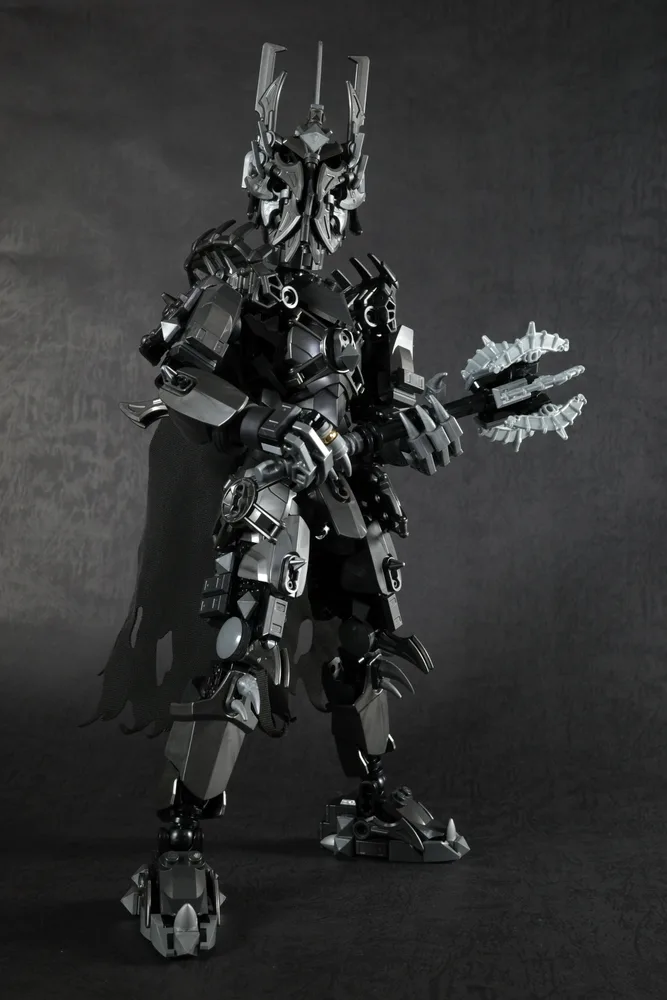
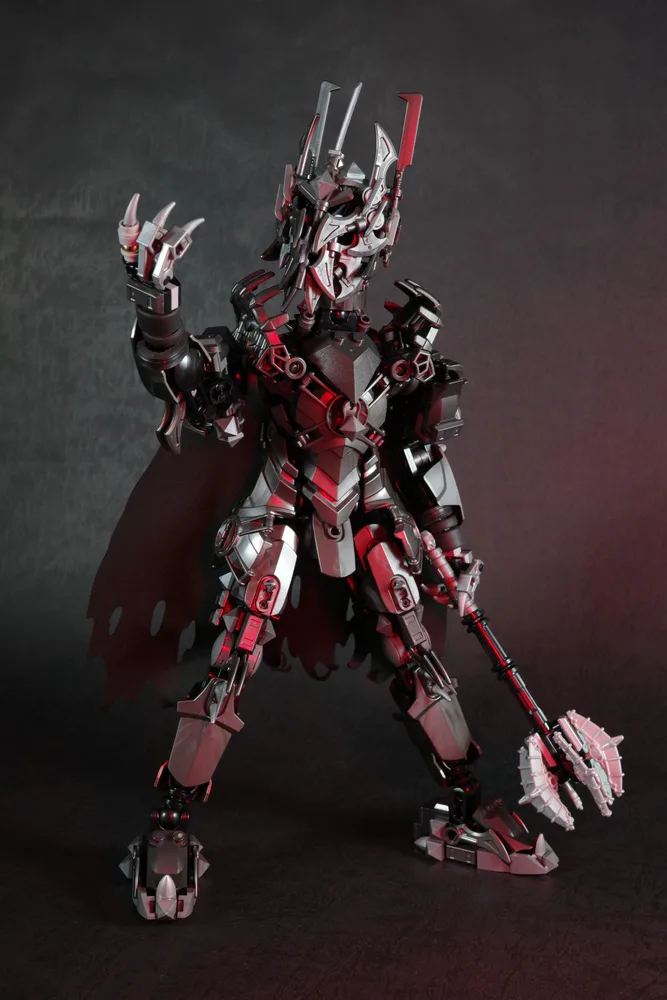
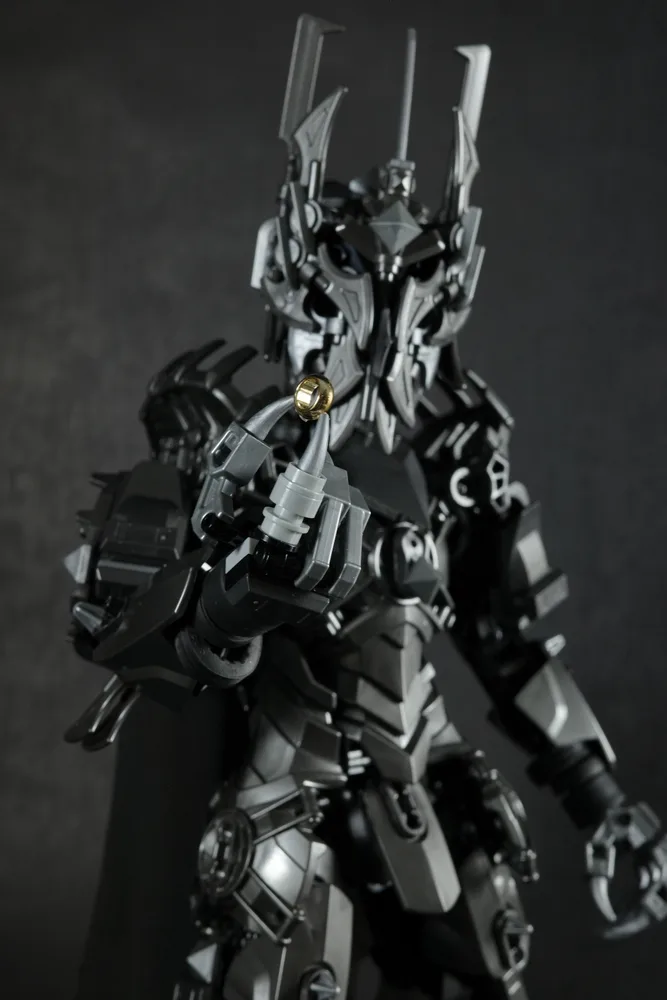
Building the Sauron head almost entirely from scratch without a base piece turned out to be a great learning experience for Haru. “This one cost me countless late nights,” he laughs. Nonetheless, it also gave him the creative freedom to capture the character’s essence perfectly.
If any builder wants to create something similar, Haru urges them to learn how to use small parts at unusual angles and adjust articulation points without the moving sections interfering with one another.
His Oni Bonecrusher model is a similar story, demonstrating a balance between source material and original vision. Driven by a fascination with the dark green aesthetics of a Hero Factory mask and his enthusiasm for the game Sekiro: Shadows Die Twice, Haru crafted the Japanese-inspired warrior. With roughly 90 hours invested, this project required immense patience.
One of the most significant challenges was structural; because the model is large and heavy, maintaining its balance was a constant struggle. Furthermore, the limited color palette of dark green meant he had to be exceptionally inventive to ensure the model had a cohesive and polished look.
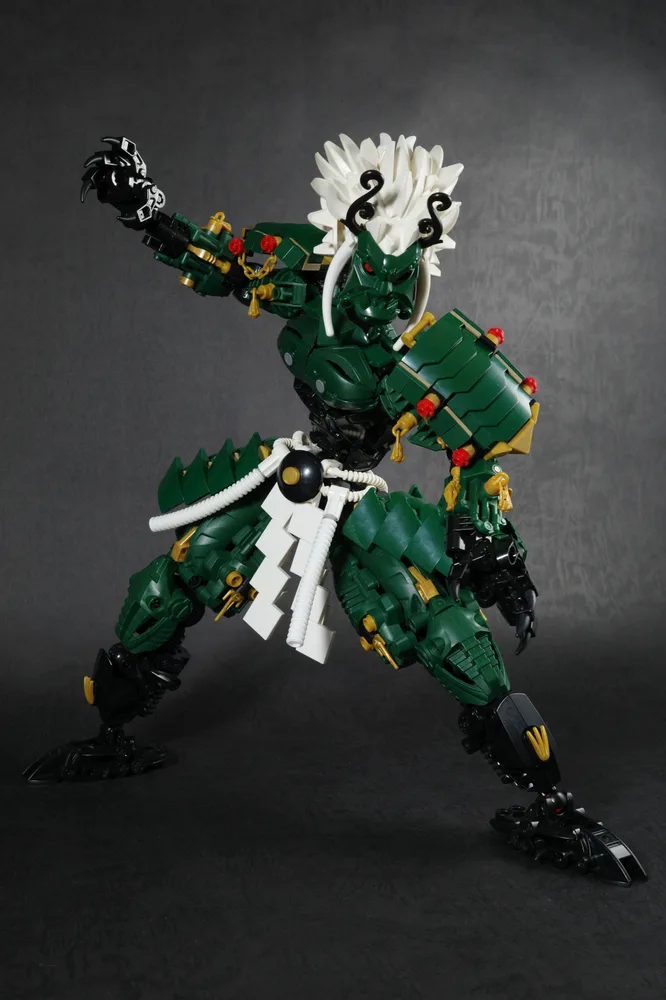
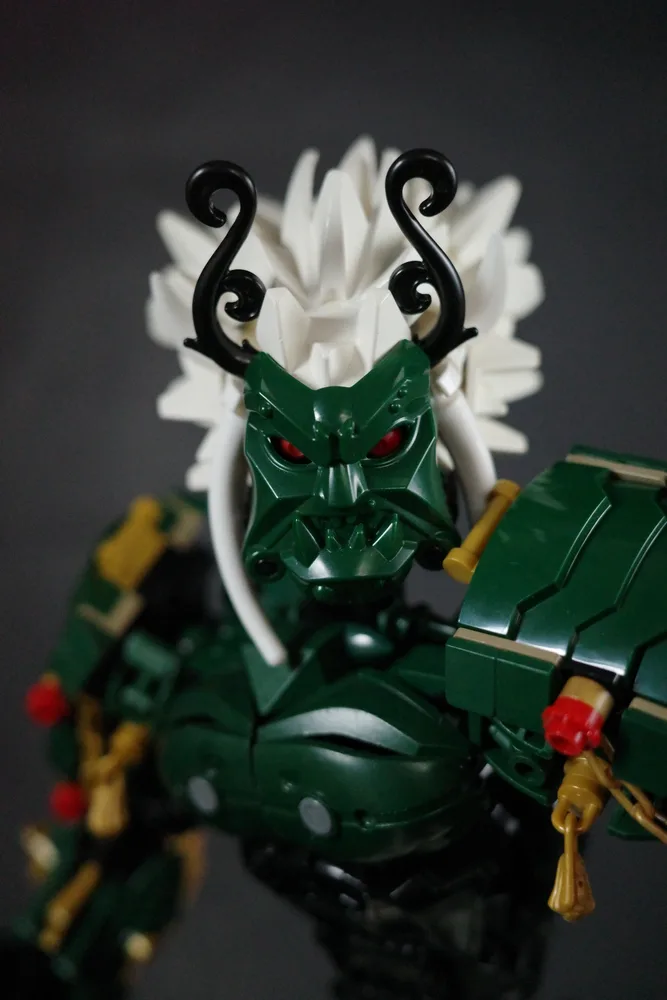
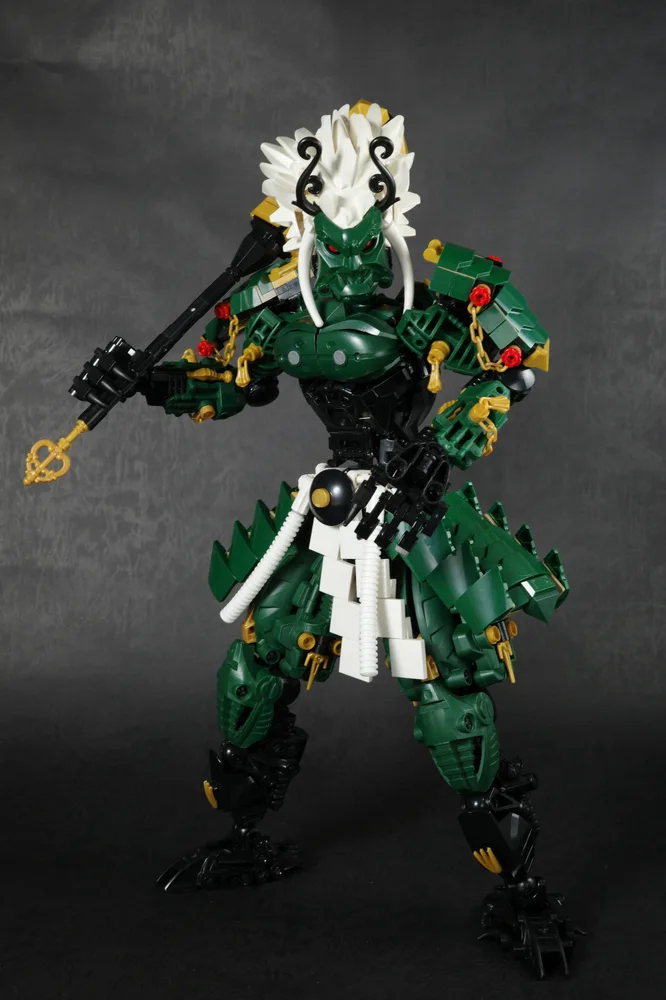
“Most of the dark green parts came from LEGO 71794 Lloyd and Arin’s Ninja Team Mechs, which provided a lot of useful pieces for the build. I highly recommend it as a parts pack,” reveals the artist. For the eyes, Haru used part 6628u because its recessed shape and pupil-like details resemble real eyes, making it perfect for this application.
The result, particularly the way the oni mask seamlessly connects with the hair on top of the head, remains one of his proudest achievements. For anyone attempting to build something similar, Haru hopes they learn more about head sculpting and how to create smooth transitions between different sections of a build.
Honoring the Sci-Fi Horror Aesthetic
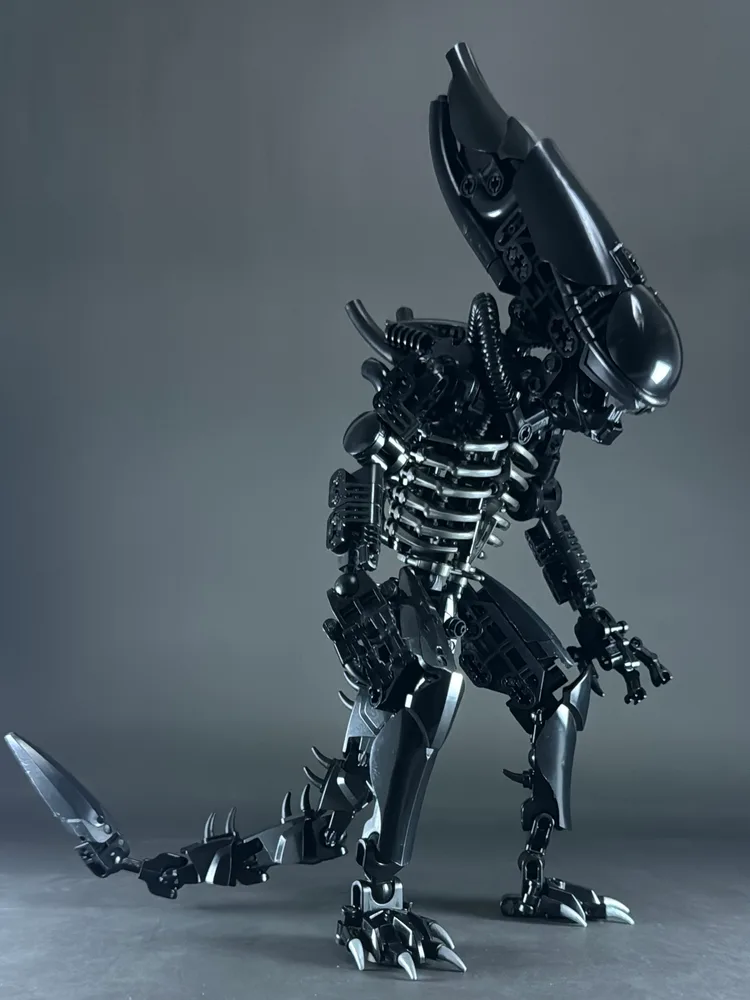
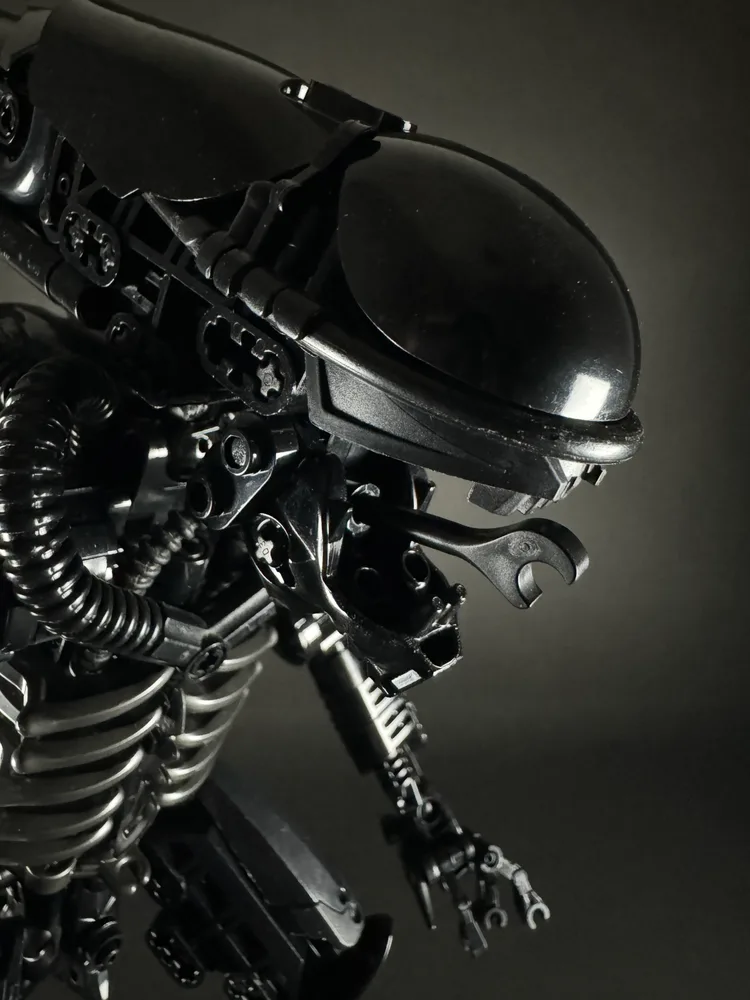
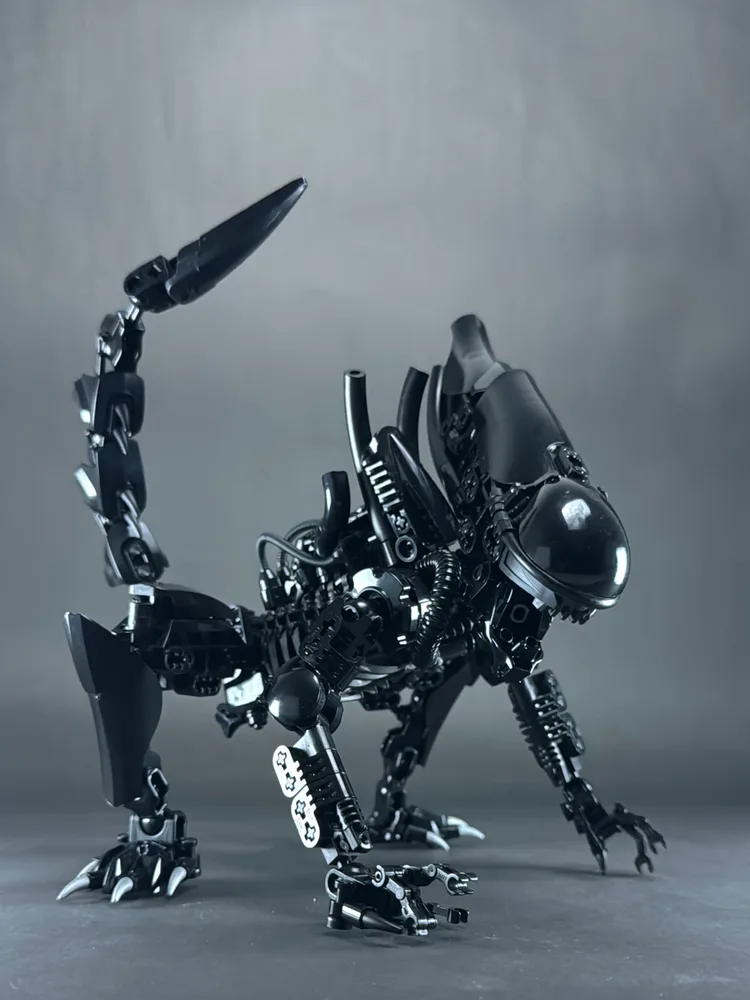
Haru’s dedication to sci-fi horror is perhaps best displayed in his interpretations of the Alien and the Predator. His version of the Alien captures the biomechanical nightmare of his favorite film franchise through a careful arrangement of armor pieces and flexible tubing. About 56 hours went into this build, which Haru jokingly describes as a “comfort-zone build.”
By using the 21560 Star Wars shoulder armor piece as the main skull structure, he established a frame that felt both alien and grounded in mechanical reality. The back of the head was created using a 26831 thigh armor piece and a 21562 shin armor piece.
Flexible tubing was used to create the flowing shapes and contours of the Alien’s head — this favorite part of the build, which took him about a week. The 44807 Bionicle Rahkshi head was used for the upper jaw, while the 7015 inverted Viking wolf head went into structuring the lower jaw.
The ribcage is particularly striking, composed of 20252 metallic silver elements galore and completed with 98562 Hero Factory handcuff pieces. Haru created an angled connection near the tailbone area, which made the ribs curve outward, giving the chest cavity an organic, exposed look.
The artist’s Predator model followed as a natural rival to his Alien build. This project that took him around 70 hours, required him to rely on unconventional parts. “I experimented with many different parts for the helmet,” Haru says.
He ended up using an inverted 98581 Hero Factory insect mask to serve as the crown of the head. Part 40379 was used to mimic the Yautja’s dreadlocks and 11010 ring elements doubled up as some decorative hair accessories.
Other than that, Haru used a couple of 28220 elements for the cheeks and 11477 elements for the mouth area. Perhaps the most inventive touch was the use of 71155 pirate net elements, with which he created the signature mesh body suit of the creature. Alongside, the shoulder armor from Knights’ Kingdom II part 54175 helped achieve the Predator’s bulky build.
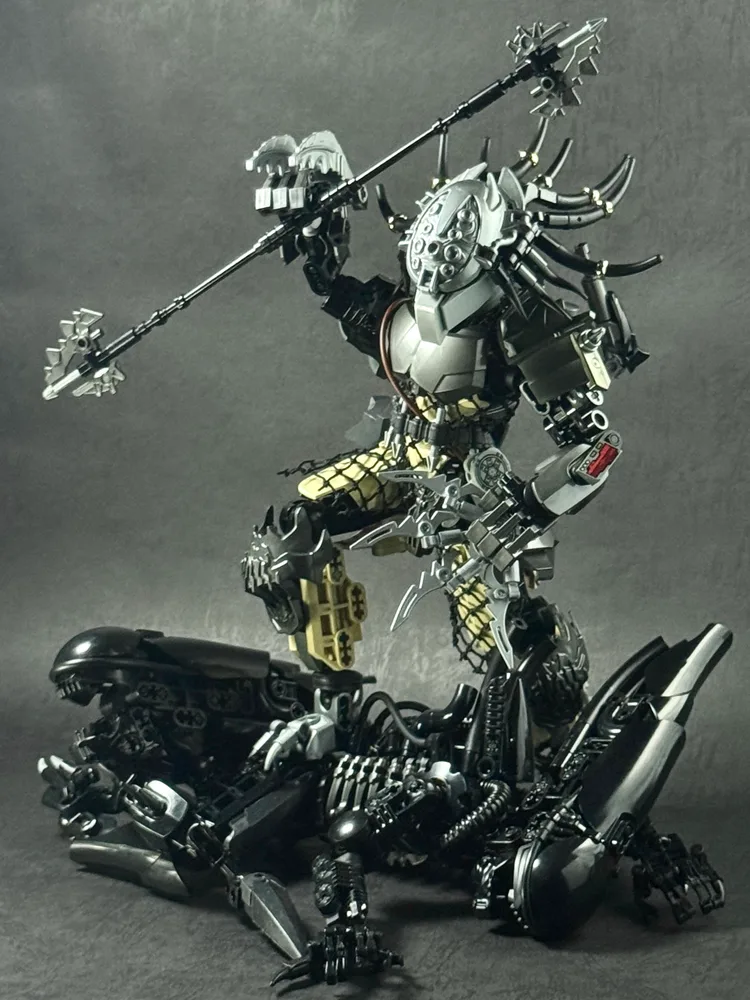
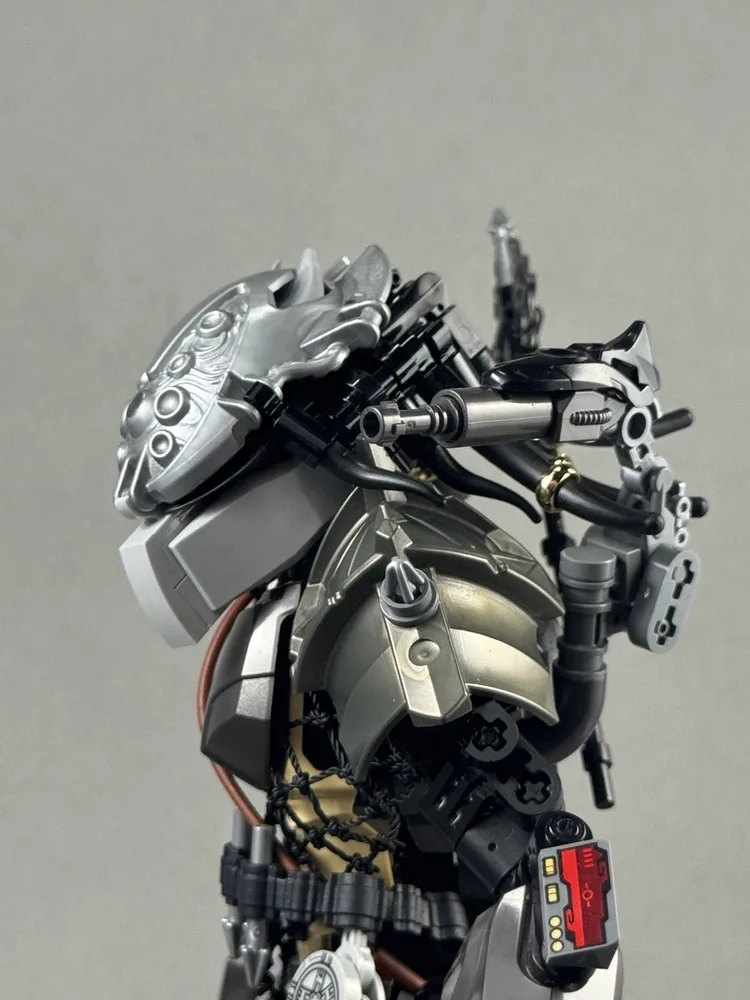
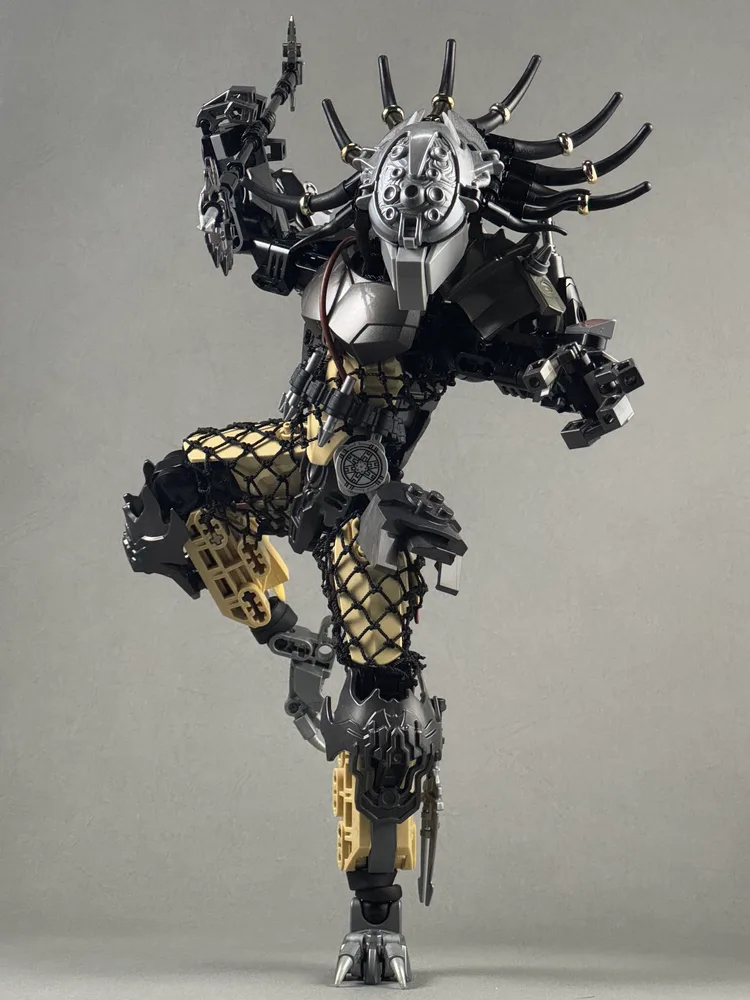
These projects reinforce Haru’s belief that the most effective way to learn is through the act of building itself, specifically by experimenting with how small parts can be angled and connected to form smooth, organic shapes.
Wisdom for the Aspiring Builder
“I completely understand that feeling,” this is what LEGO artist Haru Bonks has to say to builders intimidated by the prospect of creating MOCs. He acknowledges that looking at a finished, polished model can be overwhelming; it’s easy to view the end product as a singular achievement rather than the culmination of hundreds of small, incremental decisions.
He suggests treating the process like climbing a mountain. The mistake most people make is staring at the summit while standing at the base. Instead, the focus should be on the next immediate step.
“Take that first step and start building. As you climb, you may realize you’re heading in the wrong direction and that’s perfectly okay. Just make adjustments along the way. Keep improving little by little until you eventually reach what feels like your own version of 100%. The important thing is not reaching the summit immediately; it’s starting the climb,” he shares.
Indeed, correction in brick-building is not a failure; it’s a necessary part of refining a vision. The goal is to remain consistent and continue improving with every brick added.
In terms of technical advice, Haru stresses on the importance of understanding the mechanics of individual LEGO elements. When a builder knows how parts interact and fit together, they can eliminate unsightly gaps and create a much more refined final structure. He views bars as an essential tool. They can be used to create new connection points on Technic structures, greatly expanding building possibilities.
When asked about his own essentials, Haru admits that choosing a favorite is a difficult task, but settles on two highly versatile pieces: the Technic Axle and Pin Connector Perpendicular Split (part 92907) and the Plate 1 x 2 with Round Ends and 2 Open Studs (part 35480). He uses both extensively in his builds and would love to have a lifetime supply of them.
The Quiet Satisfaction of Creation
Ultimately, for LEGO MOC artist Haru Bonks, the joy of the hobby remains rooted in the playfulness of the experience. It’s a way of making toys for himself, a way of keeping the wonder of his childhood alive while exercising the analytical mind of an engineer.
Whether he’s spending 50 hours or 100 hours on a build, the time spent isn’t measured in output, but in the satisfaction of bringing a vision to life. This is why his workshop isn’t a place for perfection, but for the ongoing pursuit of better design.
The artist remains a fan of the broader brick-building community, finding genuine happiness whenever he sees Bionicle elements appearing in modern LEGO minifigure themes. “I hope LEGO will eventually release all six Toa heroes, or perhaps bring back other Bionicle characters in the future,” he says wishfully.
In fact, he finds himself often going back to Mechs, Bionicle-style builds, and humanoid characters. “They had the biggest influence on me during childhood and remain my favorite types of creations,” he says.
Haru’s journey is a reminder that creativity is rarely a sudden flash of brilliance. Instead, it’s a consistent, often quiet pursuit. It is found in the organized drawer of parts, the late night spent perfecting a head sculpt, and the willingness to take a single step forward in the journey, even when the destination is nowhere in sight.
Through his work, he continues to demonstrate that with a lot of patience and a bit of ingenuity, the humble brick can be transformed into something truly extraordinary.
