


When you walk down the hall of a modern art museum, you expect to feel a hush, maybe even a slight ache in your feet, and the gentle supervision of a guard standing a little too close to the canvases. You probably don’t expect to see a miniature version of Vincent van Gogh’s swirling sky popping off a living room wall, built entirely out of colorful little plastic bits that you used to step on in the dark.
For years, the LEGO Group has made an honest and successful effort to bridge the gap between high culture and the toy box. They have rolled out stunning official sets that let everyday folks recreate gallery masterpieces in their living rooms and kitchen tables. These retail boxes are triumphs of engineering, distribution, and price-point optimization. They manage to pack centuries of art history into a manageable evening or weekend project.
Yet, there is a whole subculture of builders out there operating in a completely different space. These independent artists, often working as MOC creators, don’t have to worry about whether a box will fit on a Target shelf, or if a retail price of two hundred dollars will scare off casual shoppers. They don’t have corporate focus groups telling them to scale back the piece count. They just have a vision, a massive stockpile of bricks, and an absurd amount of creativity.
And sometimes, when these independent creators really hit their stride, their custom builds completely eclipse what the official designers managed to push out of a factory. That is not to say the retail kits are bad. Far from it. But comparing a mass-market product to a custom labor of love shows just how far you can push a plastic brick when nobody is whispering about profit margins in your ear.
Let’s take a wander through three examples where independent builders took a concept already tackled by the Danish toy giant and simply ran away with it.
The Garden of Ambition: Claude Monet’s Bridge Over the Pond of Water Lilies

Claude Monet spent the latter part of his life staring at his pond in Giverny, painting those picturesque water lilies over and over until the canvas practically vibrated with light and color. Capturing that kind of impressionistic blur in a medium made of rigid, interlocking right angles is no small task.
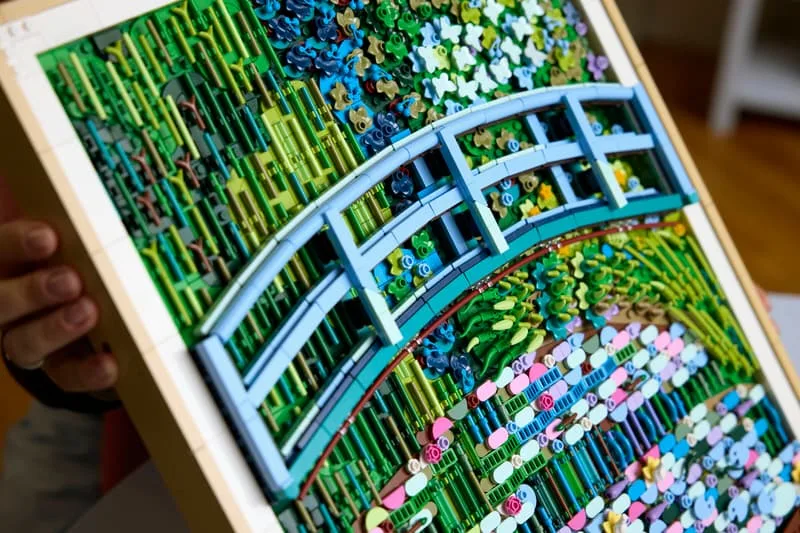
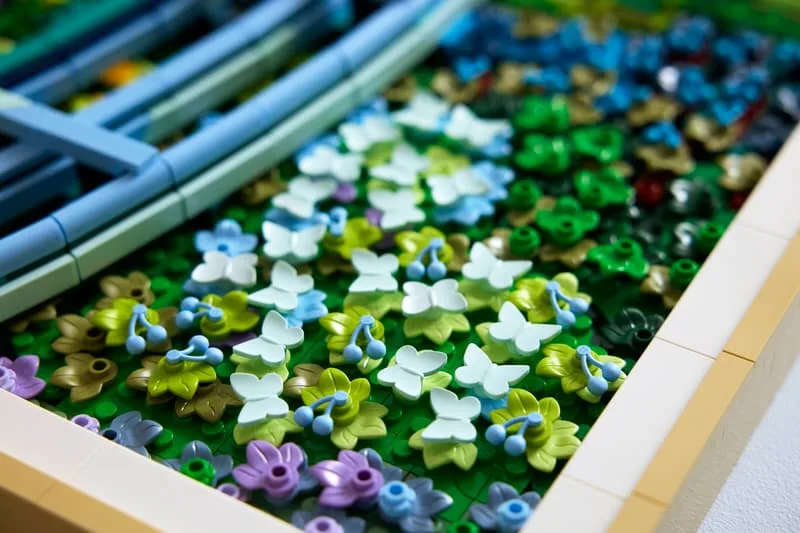
In March 2026, the LEGO Group rolled out their official answer to this challenge with the LEGO 31220 Art Claude Monet set that sits at a respectable 3,179 pieces. When you put it together, you get a lovely wall-hanging piece. It uses beautiful color layering and nature-inspired elements like tiny flowers and butterflies to give you that garden vibe right above your couch. It’s clean and well-designed, and it looks great next to a bookshelf.
Then you have what American brick artist Nathan Sawaya did for The Met Store.
Instead of hanging a flat picture on a wall, Sawaya decided to build an eight-foot-tall, immersive, walk-in 3D replica of that exact same bridge and garden with over 60,000 bricks. You don’t just look at this thing; you can literally walk through it. The contrast here is amusing when you think about it.
The official set invites you to snap tiny plastic plates into place for a relaxing weekend, perhaps while sipping coffee. Sawaya’s version requires structural engineering and a pair of comfortable walking shoes. One’s a decoration for your living room; the other’s a physical space that’ll make you feel like you accidentally shrank and wandered straight into an art history textbook. The latter’s got a photo op, too!
Wrestling Chaotic Skies: Vincent Van Gogh’s Starry Night

If you ask ten people to name a painting that practically begs to be turned into plastic bricks, at least eight of them are going to point straight at Vincent van Gogh’s The Starry Night. Those wild, churning brushstrokes look like they were practically engineered out of curves and whorls anyway.
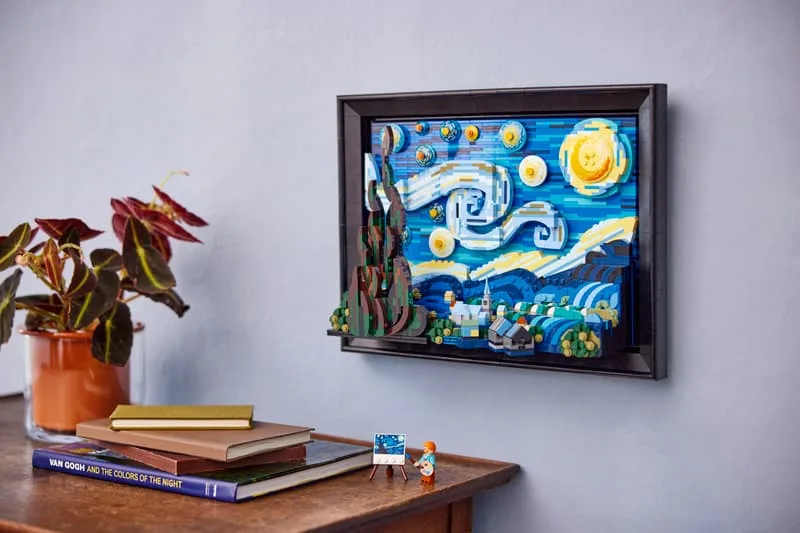
Back in June 2022, the LEGO Ideas team gave us set 21333, featuring 2,316 pieces and a tiny little plastic Vincent minifigure complete with his own easel. It was a massive hit. People loved the 3D depth and the sculptural way the official designers made the sky pop off the backplate.

On the flip side, French LEGO pixel artist BrickBoardBuilder (Grégory) decided to take a completely different route with the same subject. Instead of building a bulky sculpture that hangs off the wall like a half-baked relief map, he leaned heavily into pure graphic tile placement, treating the bricks almost like individual pixels or brush dabs.
Every single piece was laid flat with absolute, hair-splitting precision to recreate the hypnotic, fluid flow of the original canvas. What’s inspiring about this piece of art is that Grégory used thousands of discarded bricks to create it, balancing creative expression with environmental sustainability.
It’s a fascinating artistic divide. The official set goes for sculptural drama, letting pieces physically break out of the frame. The mosaic approach goes for painterly trickery, relying on color blocking and distance to make you squint and wonder if you are looking at plastic or oil paint. Both are cool, but the sheer patience required to map out a massive flat mosaic without losing your mind is something awe-inspiring.
Capturing an Enigma: Leonardo da Vinci’s Mona Lisa
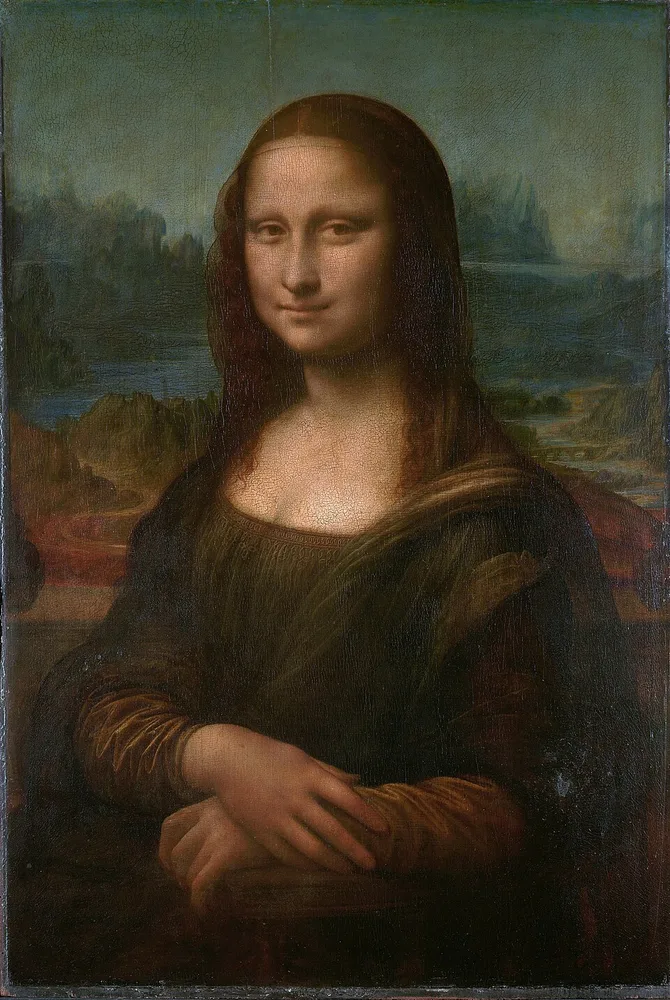
Leonardo da Vinci’s Mona Lisa is arguably the most famous face on the planet, which also makes it a massive trap for any artist brave enough to reproduce it. Get the eyes just a millimeter off, and suddenly she looks less like an enigmatic Renaissance icon and more like your uncle Gary trying to figure out how to use a smartphone camera.
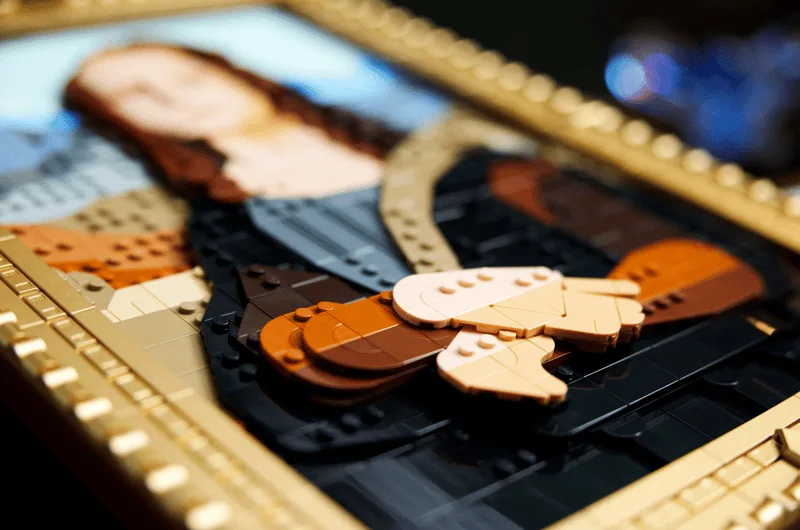
In October 2024, the LEGO Art theme tackled this monster with set 31213, a 1,503-piece build that raised a few eyebrows by ditching the famous muddy yellow varnish look in favor of a much bluer historical color palette.
It even came with a fancy buildable gold frame to make you feel like you just robbed the Louvre and shoved the loot into the back of your sedan. It’s a neat, tidy kit that gets the job done within the constraints of standard retail parts. If you want to buy it, you should hurry because LEGO 31213 Mona Lisa is retiring soon.

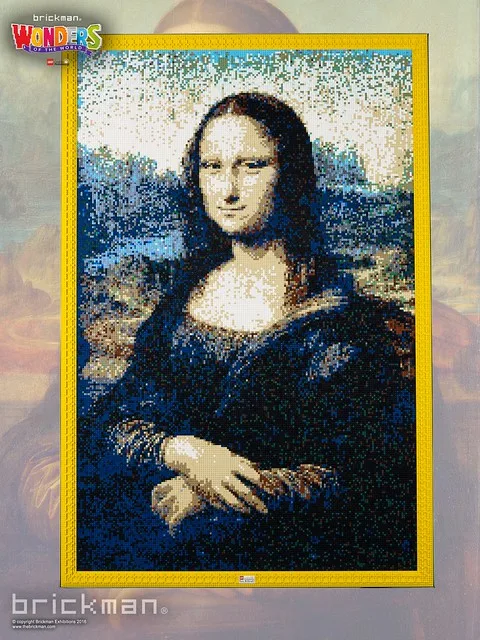
I digressed, but Australian master builder Ryan ‘The Brickman’ McNaught tackled the world’s most famous smile in bricks way back in 2016 with scale-breaking ambition. Containing 27011 pieces, his version is even larger than the original painting! Mona Lisa’s mouth alone took Ryan over six hours before it was fully done.
Now, McNaught and builders of his caliber don’t have to worry about whether a kid in a bedroom can finish the build in three hours on a rainy Sunday. Their focus is entirely on scale, proportion, and the heavy, undeniable gravity of classical art.
When you look at the artist’s independent monumental take on the Mona Lisa, the curves of the face and the subtle shading of the background take on a different weight. The sculptural accuracy is uncanny. The piece feels more like a sculpture commissioned by a Renaissance merchant who perhaps had way too much gold lying around. And that’s mind boggling!
The Triumph of Accessibility and Design: Why the Retail Boxes Still Win the Day
It’s easy to get carried away daydreaming about massive, eight-foot museum installations and ultra-precise mosaics that take months to design. But let’s be completely honest (and practical) for a second. Most of us don’t have an empty warehouse in the backyard, a room full of five hundred thousand spare bricks, or the insane amount of time required to engineer a custom masterpiece from scratch.
That’s where the official retail sets earn every single penny of their price tags, while also remaining vital for the broader community.
Because of clever piece counts, streamlined supply chains, and mass production, official LEGO sets are affordable compared to sourcing thousands of individual parts on the aftermarket. They bring historic art into the homes of regular folks who love the idea of building a gallery piece on their coffee table, even if they wouldn’t know the first thing about designing a custom sculpture without instructions.
At the end of the day, both worlds feed into each other in a pretty cool way. The official sets open the door, handing the basic tools and inspiration to millions of people who might never have picked up a brick otherwise. Meanwhile, MOC artists keep pushing the medium into jaw-dropping territory, showing us all just how far you can stretch a simple plastic toy when you refuse to play by the rules.