


By day, Trevor Pearson-Jones shapes complex electrical drawings, but his early mornings are reserved for a much more chaotic sort of engineering. Trading technical perfection for pure joy, the Nova Scotia-based artist crafts organic, wonderfully bizarre LEGO mashups designed to make people laugh, smile, or simply question what on earth they just saw. For Trevor, the ultimate goal of creative building isn't status, but an authentic emotional connection, proving that the most memorable art happens when you stop chasing instructions and fully embrace the silly.
Within the LEGO MOCist community, the pressure to build perfect photorealistic replicas or complex, sprawling cityscapes often feels heavy. But within this same community, artist Trevor Pearson-Jones prefers to keep things fun.
An electrical engineer by trade and a creative force by passion, his tryst with brick-building is defined not by perfection, but by his focus on joy, humor, and clever visual pun.
Originally from Québec City in Canada, Trevor now calls Nova Scotia home, where he lives with his wife and their newborn. He spends his days handling technical electrical drawings and reserves his mornings for building whatever makes him laugh.
As a LEGO MOCist, Trevor is a master of chaotic, creative play, but insists that he is just a “normal guy and definitely not a dozen weasels in a trench coat.” Well, we’d like to believe otherwise, because in him we found an artist whose art brings a necessary spark of life to the community.
From Dark Ages to Creative Bloom
Like many fans of the hobby, Trevor’s relationship with LEGO follows a familiar story. He grew up with bricks as a child but eventually drifted away during what he describes as a “dark age.”
It was not until the year before the pandemic that his best friend pulled him back into the fold. Initially, it was just about buying sets, but soon enough, the urge to change what he saw on the box became impossible to ignore.
Due to his blissful childhood, Trevor’s passion for LEGO is rooted in fond memories of sets like Rock Raiders The Loader Dozer (4950), a Christmas gift that once kindled his love for the medium. Yet, he points to a later gift from his father, the Wild Collection set (4101) as the true catalyst for his creative growth. That set opened his eyes to the possibilities of building beyond the instructions.
His transition from building stock sets to designing original MOCs, however, was gradual. It started with minor modifications in premade sets and eventually evolved into large-scale restructuring.
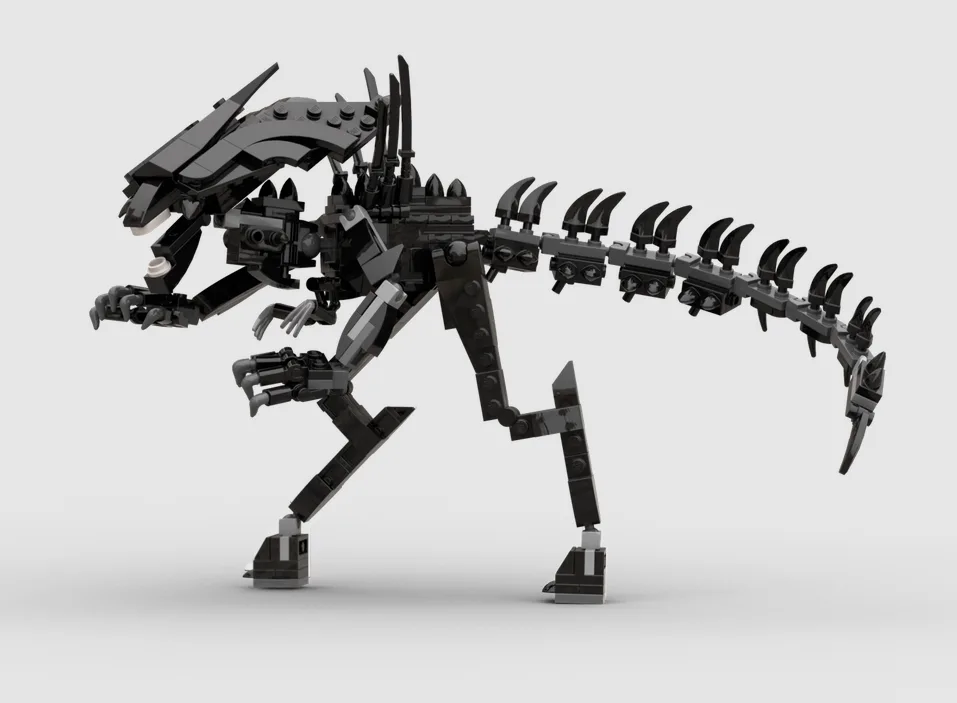
His first MOC was a bold take on the Xenomorph Queen from the Alien franchise. From that build on, his focus shifted entirely toward original work, leaving the standard sets behind. “This was where I realized I had the skill to build things I thought LEGO would never produce,” Trevor says.
Philosophy of the Build
For Trevor, building is never about status or technical perfection. It’s about making an emotional connection. He wants people to laugh, smile, or stop and wonder what on earth they just saw! So, he draws heavily from the weird and bizarre to create mashups and visual comedy.
His passion for biology also plays a role, seeping into his designs as he explores organic shapes with plastic bricks. “Most of my builds are organic, cartoony or both. I do always come back to making strange things. I just love making goofy builds. Either to make me laugh or other people, says Trevor with a little chuckle.
The MOCist’s building ritual is as disciplined as his engineering career. Trevor Pearson-Jones is an early bird, waking up before the workday begins to carve out quiet time for his projects. “That’s when I build most of my MOCs,” he adds. A cup of coffee accompanies him into this morning window when he does his best work.
This is also the time when he gets into the zone, fueled by a well-organized workspace. He is famously vocal about his distaste for digging through bins of unsorted bricks, which is why he relies on IKEA drawers and hardware storage bins to keep his inventory visible.
“When I build, I like having everything on hand quickly,” Trevor says. He further credits his visual memory for helping him know what exists in what colors in his inventory, as well as the digital utility of Stud.io, the LEGO tool which helps him research piece colors and availability.
When asked if he could have a lifetime supply of any one LEGO part, he immediately points toward rock finger slopes. “I love using them for all sorts of things. So much so that one of my good friends has nicknamed them the Trevor slopes,” he laughs. The artist also talks about various leaf pieces as essentials, noting that he frequently uses them as fur and feathers in his more eccentric creature builds.
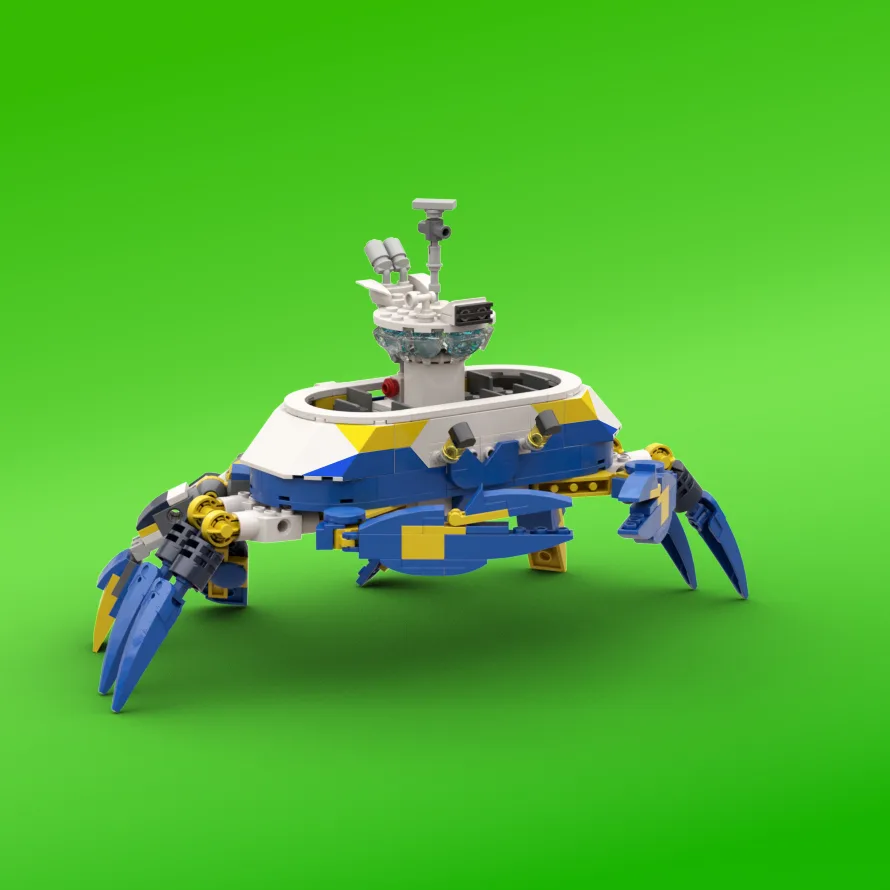
When he hits a creative block, which often happens when he takes building breaks for too long, this jolly artist has a simple, effective remedy. “When in doubt, Crab,” quips Trevor. Yes, he builds a crab to get his fingers moving again and break the daunting feeling of starting a new project.
F1 Animals: Engineering the Unexpected
One of Trevor’s most notable recent projects is the F1 Animals series. “If you’d told me a year ago that I would end up owning the entire F1 collection, I would have thought you were crazy. Yet, here we are,” he admits.
It was a collaborative brainstorm with his local LUG that changed everything for him. The group wanted to collectively create something wacky — something along the lines of the 75440 Star Wars AT-AT and the 10318 Concorde collabs they’d had for their local LEGO convention. But, as a smaller club, they had to opt for a lower price point, eventually settling for the F1 Speed Champions line of sets.
From the very beginning, Trevor knew his contributions would be organic. He began with a Hammerhead shark, with a head inspired by the shape of the vehicle’s front end. Other animals followed: bulls and horses inspired by team logos, then squids and whales based on the unique geometry of the cars.
“Eventually I had so many different animal types, I tried diversifying into other types of animals, like marsupials, reptiles, and arthropods,” Trevor says. Arthropods, in particular, are his favorite to build because their segmented bodies translate well into LEGO.

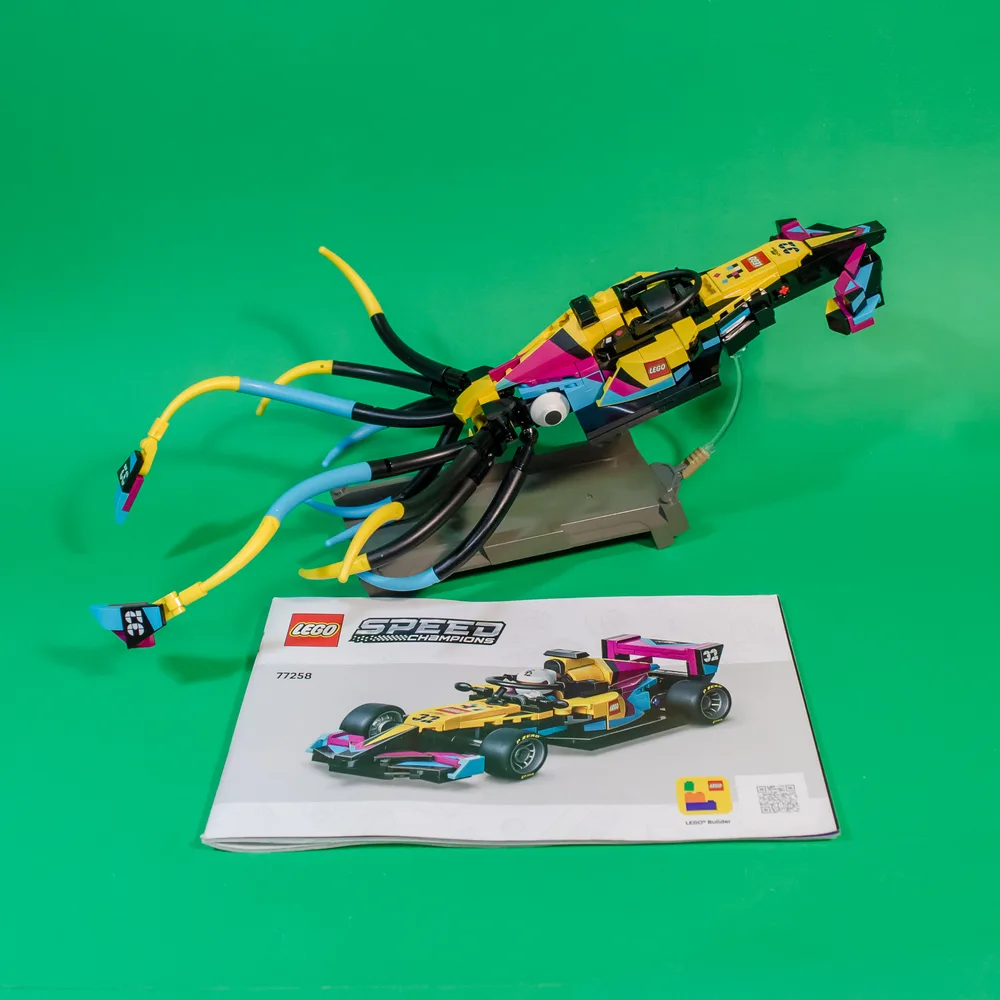
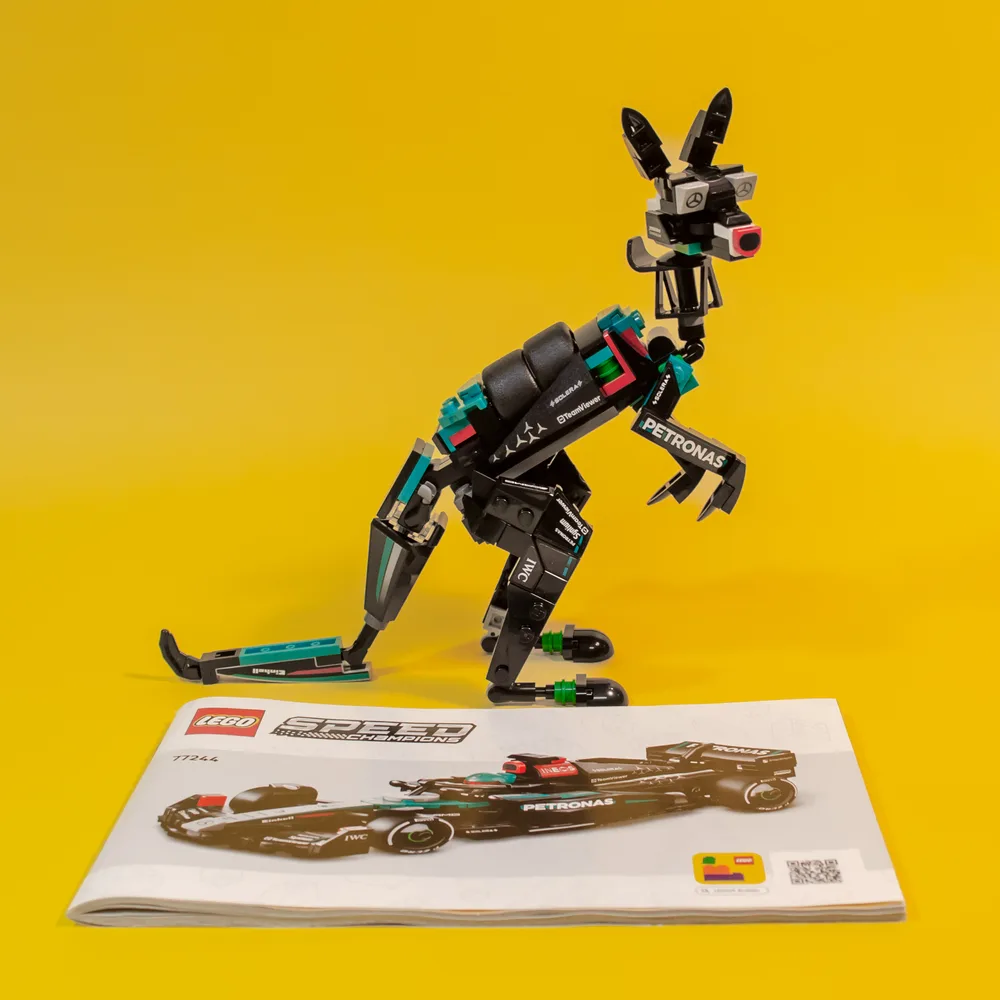
Spending roughly 4 to 6 hours on each animal, the artist even found a breakthrough technique in using tires to bulk up the bodies. He succeeded particularly when using 3mm hoses from the sets, originally designed as the main structural shafts for wheels. One build, a sperm whale, he says, became possible only because of this trick.
Some sets, however, were notoriously difficult. The 77259 Audi Revolut, for instance, proved resistant to his ideas. “It didn’t have the best part selection for creating an animal as an ALT build,” Trevor reveals. He tried four different animals before giving up on an alt-build and switching to a modification route.
Nonetheless, Trevor describes the entire experience as a lesson in limitation. “Alt builds are a great way to practice building with a limited selection of pieces,” he notes. “Just because you have a set that is for making one thing doesn’t mean you can’t go a completely different route for a build.” He isn’t much of a fan of F1 racing, but turning bricks into a menagerie of creatures gets him very excited.
Pokémon and the Art of Silliness
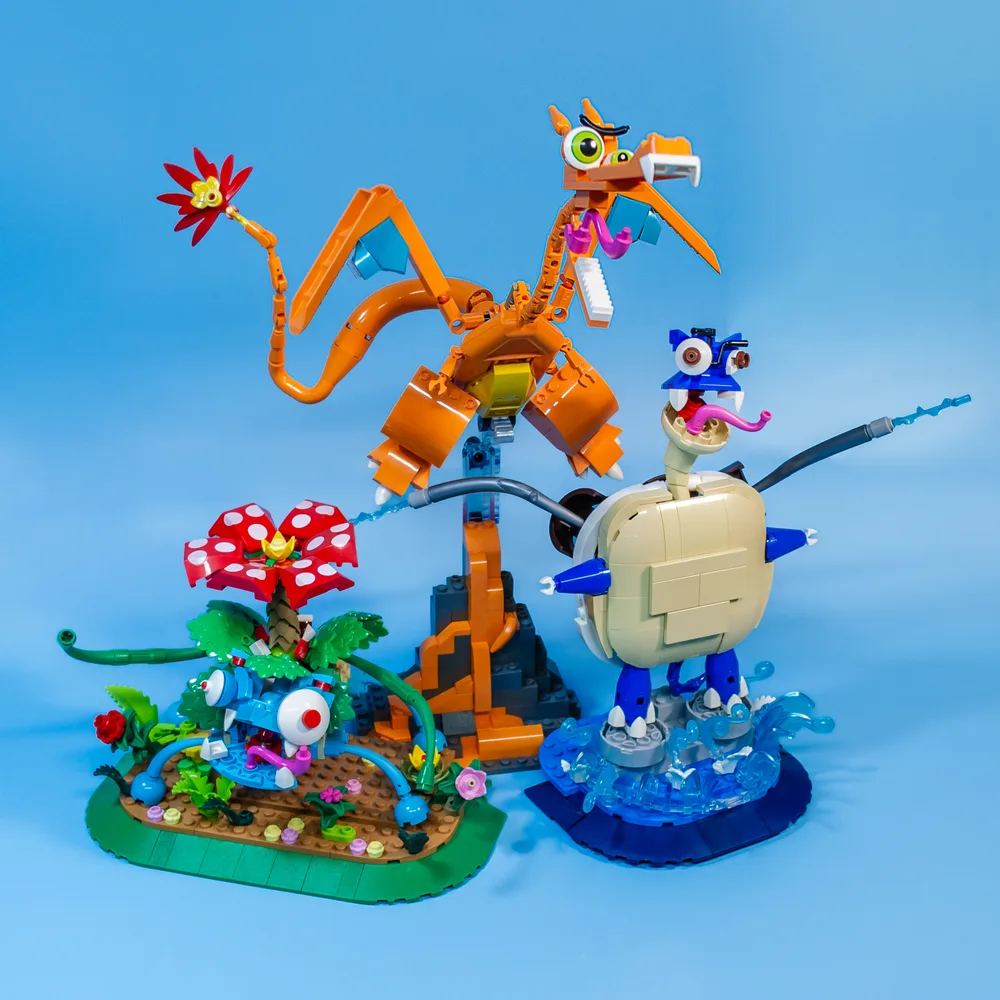
Trevor’s Pokémon Kanto Starter Trio MOC was born from a friendly rivalry. His friend and German MOC artist Thorben Baumheur teased him about his lack of Generation 1 Pokémon builds.
Although Trevor grew up with Generation 1 and has a fondness for it, he admits to finding it somewhat overrated. “It’s far from being my favorite generation,” he says. The trio of builds was his cheeky response to the buzz surrounding the official Kanto starter sets released recently.
He approached each build with a focus on exaggeration, starting with Charizard and then moving onto Blastoise and Venusaur to complete the trio. Trevor used dinosaur tails to create oversized limbs, like the stretched canons for Blastoise and long legs for Venusaur.
The Charizard model features a raft for the main body and carrots for the horns. The artist even managed to sneak in three brick separators to construct this LEGO MOC. He spent roughly ten hours on this project, focusing on finding the perfect balance between accurate character recognition and his own comedic style.
He is particularly proud of applying NPU techniques, such as using Minny Mouse dress pieces to create the flower petals for his version of Venusaur. His advice to anyone attempting similar work is simple: push the silliness as far as it can go.
The Bluenose Sailfish
Perhaps his most personal build is the Bluenose Sailfish MOC. It began with his love for local icons in Nova Scotia. Trevor had previously built a crab-ferry mashup and a frog based on another local landmark, and he decided to continue the tradition.
The legendary Bluenose schooner is a massive symbol of pride in the province, appearing on the Canadian dime and provincial license plates. Trevor, a sucker for maritime icons, knew the complementing animal had to be a fish, and while he initially considered a shark, the sailfish concept struck him with the force of what he describes as “a ton of bricks.”
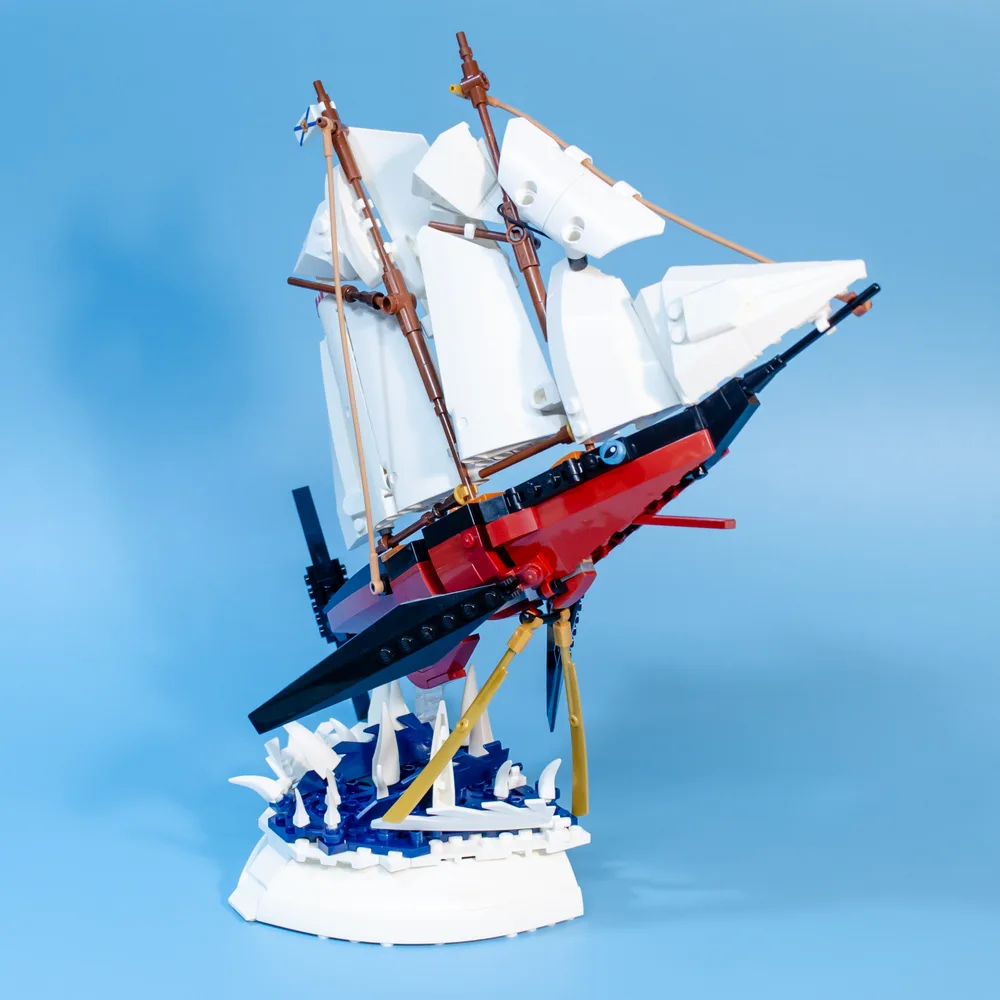
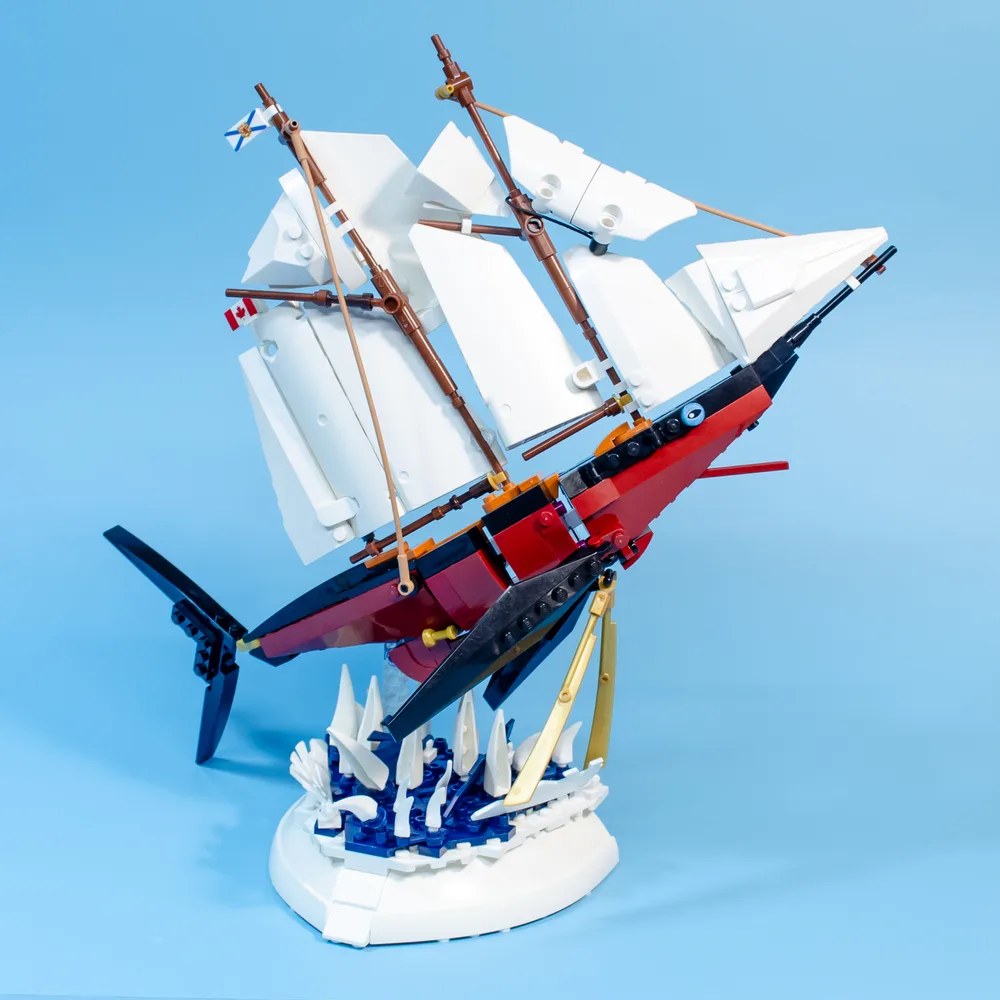

It was an obvious, effective choice, even if they aren’t native to the local waters. And thus began a 15-hour session with one major challenge: the sails. Trevor had used custom fabric or plate-based sails in previous attempts and wanted to find a better way using only official, rigid pieces.
While rummaging through his bin of bricks, he found the perfect solution in Technic panels. The base of the model was also a technical puzzle, created by flipping over a hull piece from a ship and reversing the studs to cover the underside. He finished the scene with claws, horns, and feathers to recreate splashing waves.
Everything in Trevor’s Bluenose Sailfish MOC is made of LEGO pieces, except two printed 1x2 tiles for the Nova Scotia and Canada flags. It’s a testament to the artist’s ability to solve complex structural problems through unconventional NPU.
Beyond the Brick: LEGO as a Voice
While Trevor’s art brims with humor and whimsy, he sees the medium as having a much broader potential, especially when it comes to the wider LEGO community’s evolution. When asked about trends in the community that excite him, Trevor points toward the increasing intersection of art and social advocacy.
“Something I have touched on in the past was how I felt like there weren’t enough people building political builds with LEGO,” he explains. “I no longer think this is the case and I am so very happy about it. LEGO is just another great medium in which people can use to speak up about the wrongs in the world.”
It’s a thoughtful reminder that behind the goofy builds, there is an artist who deeply respects the power of the brick to ignite a revolution.
Pearls of Wisdom for Aspiring MOCists
When asked for advice for those who feel overwhelmed by the prospect of building a LEGO MOC for the first time, Trevor quotes Alberto Scorfano from Luca: “Silenzio Bruno!” He asks builders to stop worrying about perfection. Creative building should be a source of fun, not stress. “You can always make it better later,” he says.
Indeed, there’s absolutely no need to make something perfect on the first pass, there’s always time to go back and refine the details later. “If you want to build up your courage, small tweaks to sets can be a great start,” he adds.
Trevor further urges builders to focus on what genuinely inspires them rather than what they think others might want to see. Authentic passion, he argues, will always find an audience.
Trevor’s LEGO MOC journey is a reminder that the most interesting things in the community are often the result of someone simply sitting down with a cup of coffee, embracing the silly, and refusing to be intimidated by the instructions on the box. He’s exactly the kind of person the LEGO community needs more of: someone who treats the medium with technical skill but refuses to lose the play in the process.
