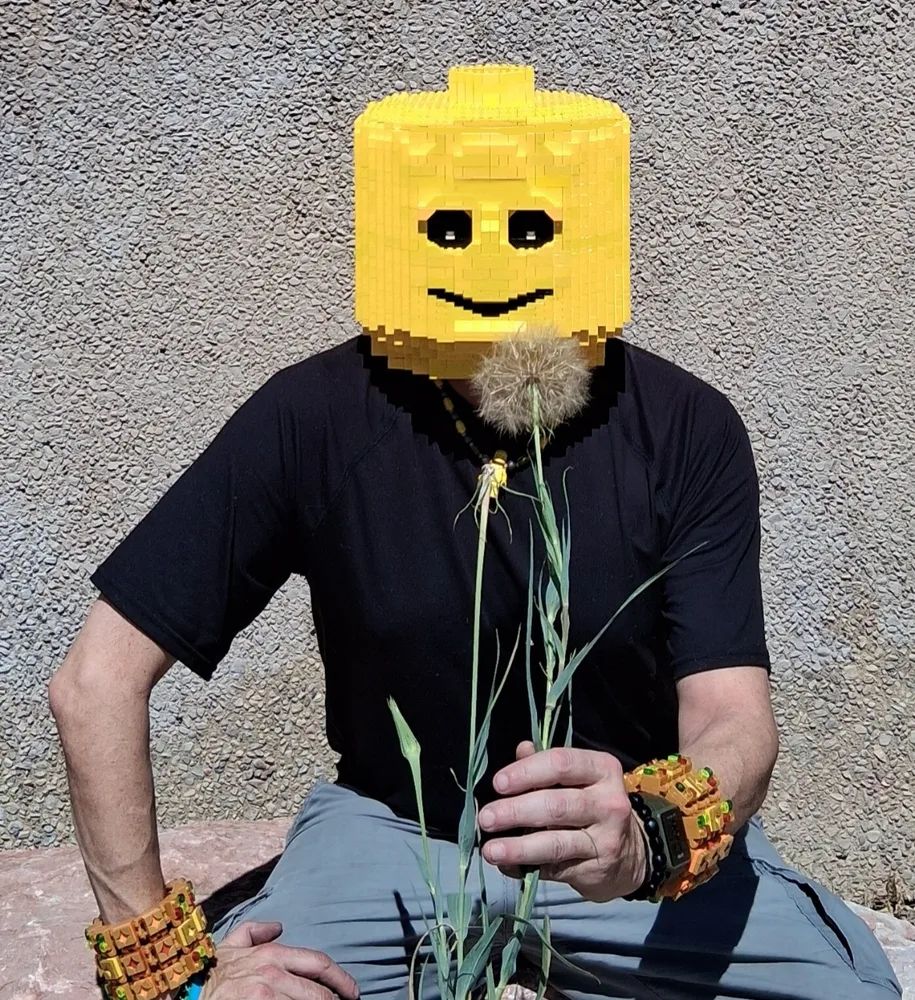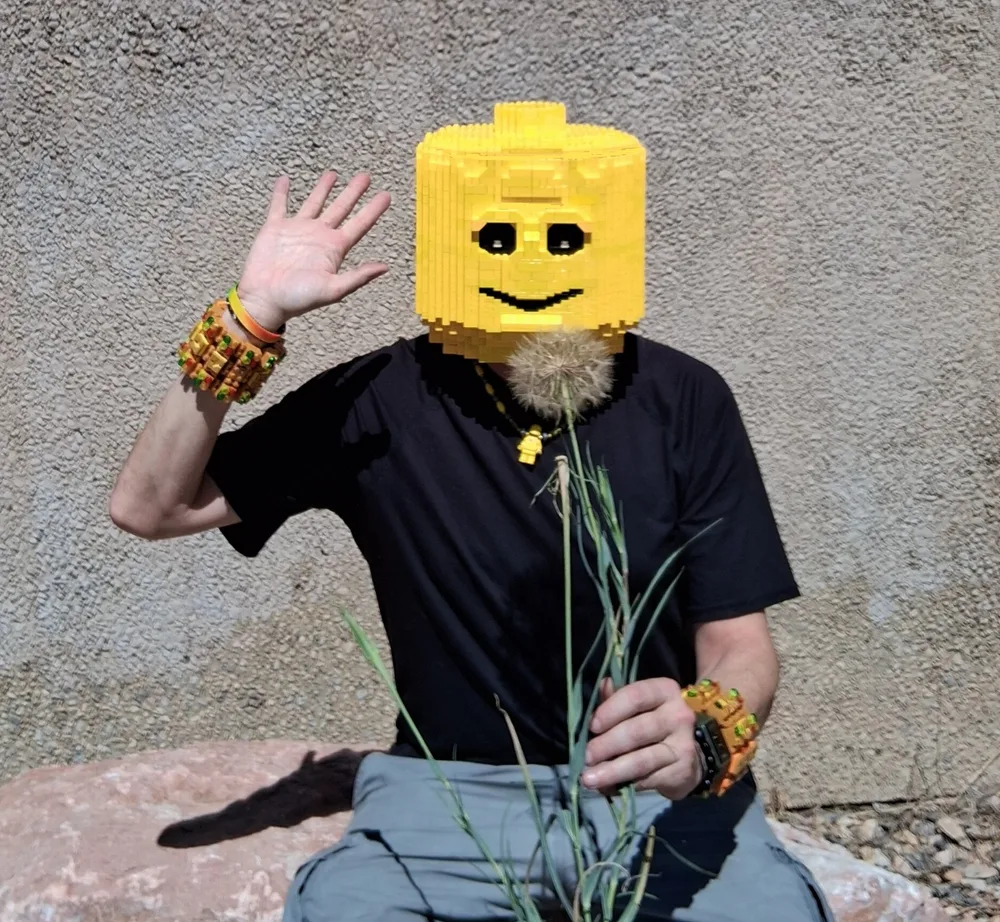


Michael Dimitri Sammann is a Salt Lake City-based LEGO MOCist who creates tactile, highly interactive builds designed to foster human connection. Balancing analytical finance work with a kinetic, movement-driven building process, he shapes large-scale, playable art meant to be experienced firsthand and eventually passed on to the next generation of builders.
A treadmill motor probably isn’t the first thing you’d associate with fine art. Yet, for Michael Dimitri Sammann, that low, steady hum is the soundtrack to his most creative hours with LEGO bricks.
If you stop by his studio on a good day, you won’t find him hunched over a desk in a quiet room. Instead, he’s usually standing at a custom-built table draped over the machine, moving to the rhythm of his own life with Netflix playing in the background and drawers of bricks stacked up — flats on the left, bricks on the right.
Michael is someone who has never found focus in stillness; he finds it in the rhythm of his own life. For him, plastic bricks aren’t static pieces to be assembled and stared at; they aren’t a way to kill time either. They’re a bridge between his imagination and the people around him — tools for human connection meant to be handled, played with, and eventually passed on to someone else entirely.
Based in Salt Lake City, Utah, this jovial LEGO artist balances a professional life as a Financial Analyst for the State of Utah and a server for Squatters at the Salt Lake City International Airport. Yet, his true creative calling rests somewhere between the analytical precision of finance and the whimsical freedom of brick-building.
So, where everyone else sees a set on a shelf or a desk, Michael sees a blank canvas for art. He is also particular about being methodical in his building process. “I have to dedicate just as much time to sorting and organizing as I do to building,” he adds. It’s a full-on ritual: the walking, the show, the building on the move, and the constant organizing. It keeps him amped up.
A Lifelong Spark
Michael’s been around bricks since he was a kid. “I’ve just always loved LEGO for as long as I can remember,” he says. The only child of his parents, his story goes all the way back to 1983 with his first set, the 6930 Space Supply Station, which ignited a spark that never quite went out. “I still have the blue support structures from that set,” the artist reveals.
Decades later, those pieces from the original kit remain carefully tucked away in his filler box, waiting to serve as the literal bones for whatever he’s working on next. It’s a nice link to the past, but Michael doesn’t spend his time looking backward.
He surely is a busy professional, but when he’s off the clock, his mind is stuck on how to turn a bunch of bricks into something that brings people together. The hobby has evolved through phases, moving on from following pre-made instructions to a deeply personal pursuit of MOCs that focus on the community and its sense of shared joy.
For a guy who works as a Financial Analyst and serves at the airport, this is Michael’s version of recharging. He needs the movement, the sound, and the constant sorting of parts just to keep his mind on track.
The Creative Flow
When asked what drives him to build, the artist talks about the pure joy of brick-building. Given his profession, you might expect him to be all about logic and plans. But Michael is surprisingly fluid.
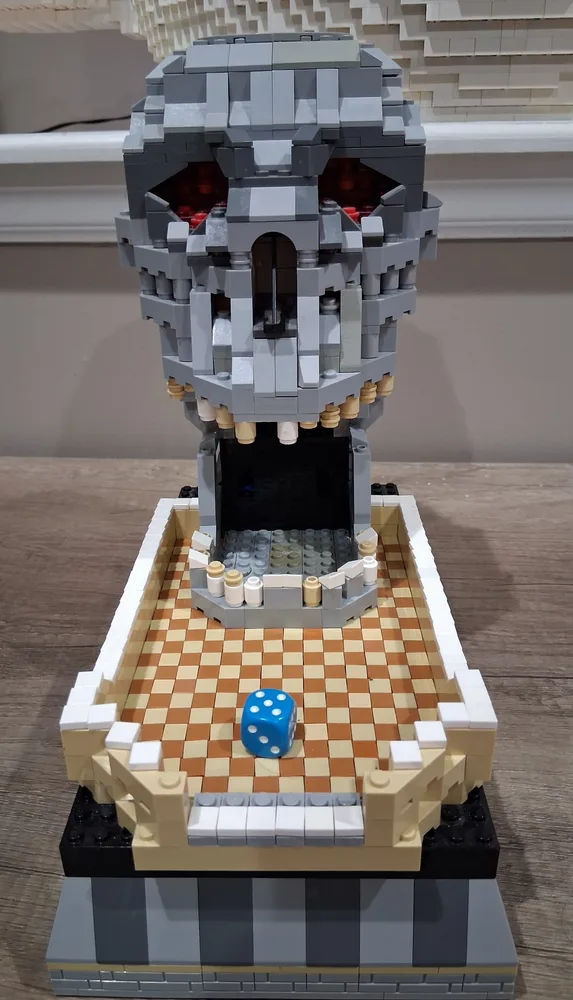
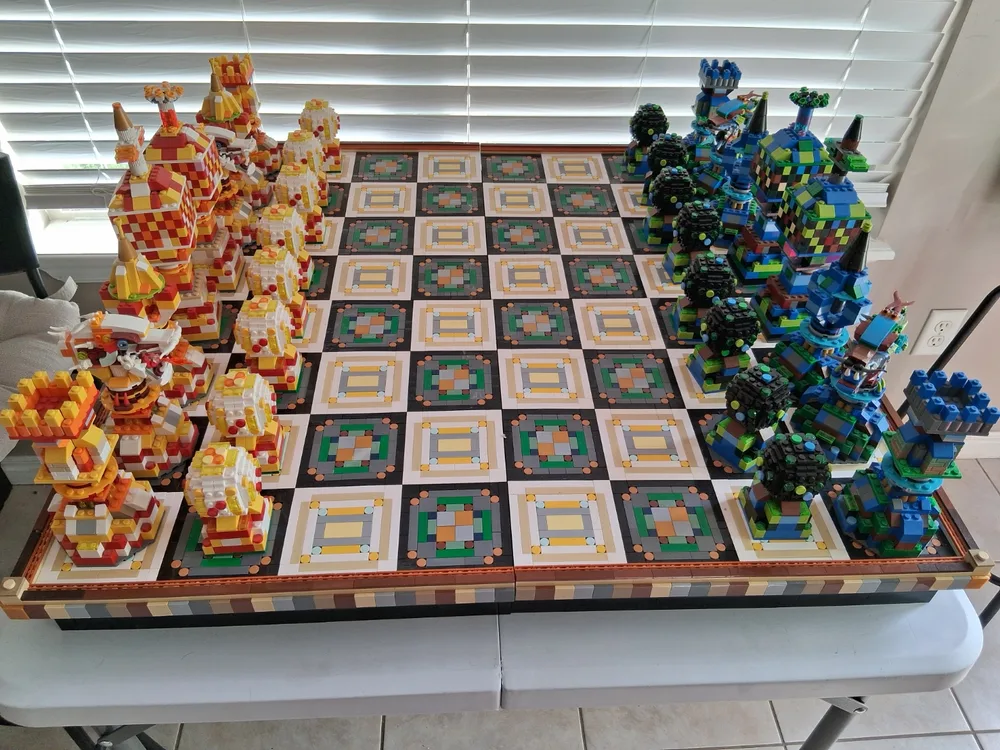
He doesn’t stick to one single lane. Instead, he lives a life of multiple interests, moving between recording independent music, 3D printing custom chess sets, and the deep, immersive process of large-scale LEGO builds. It’s all part of the same creative outlet for him.
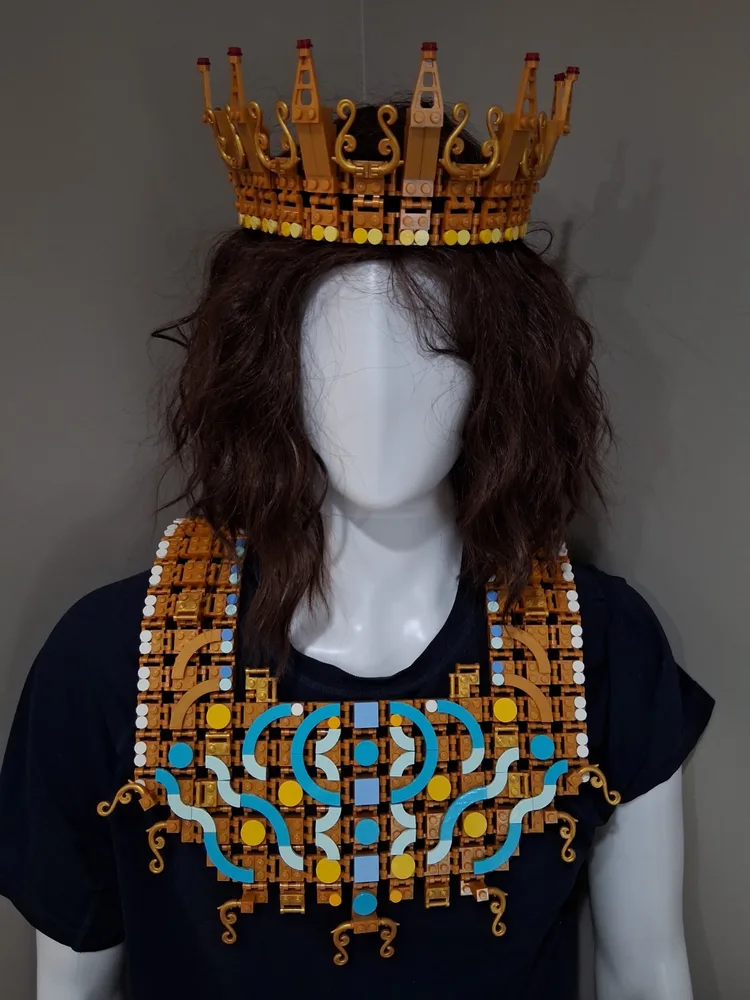
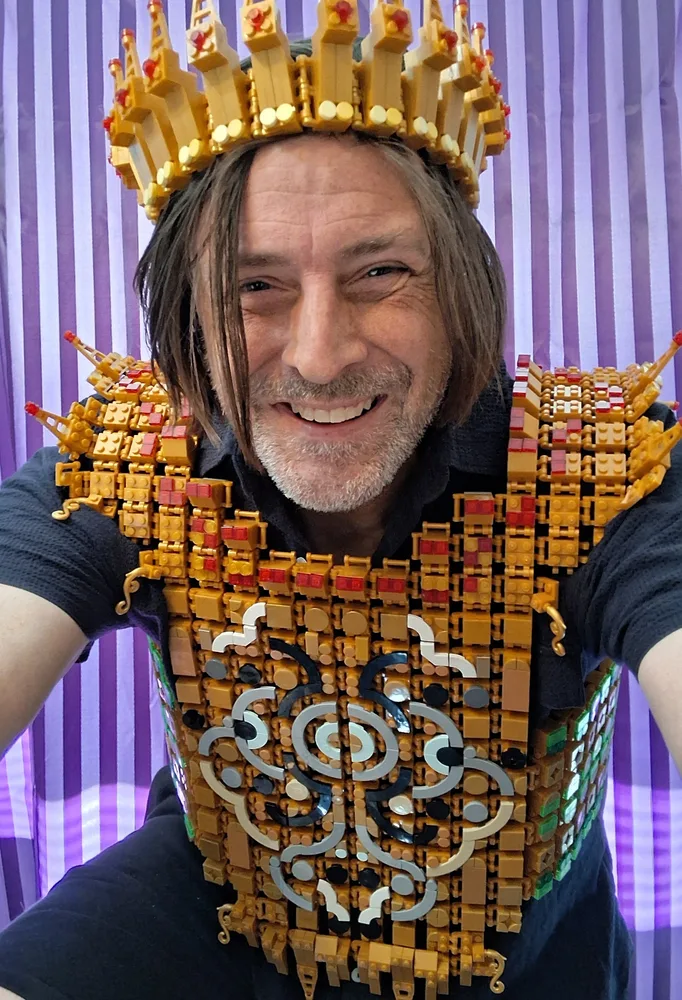
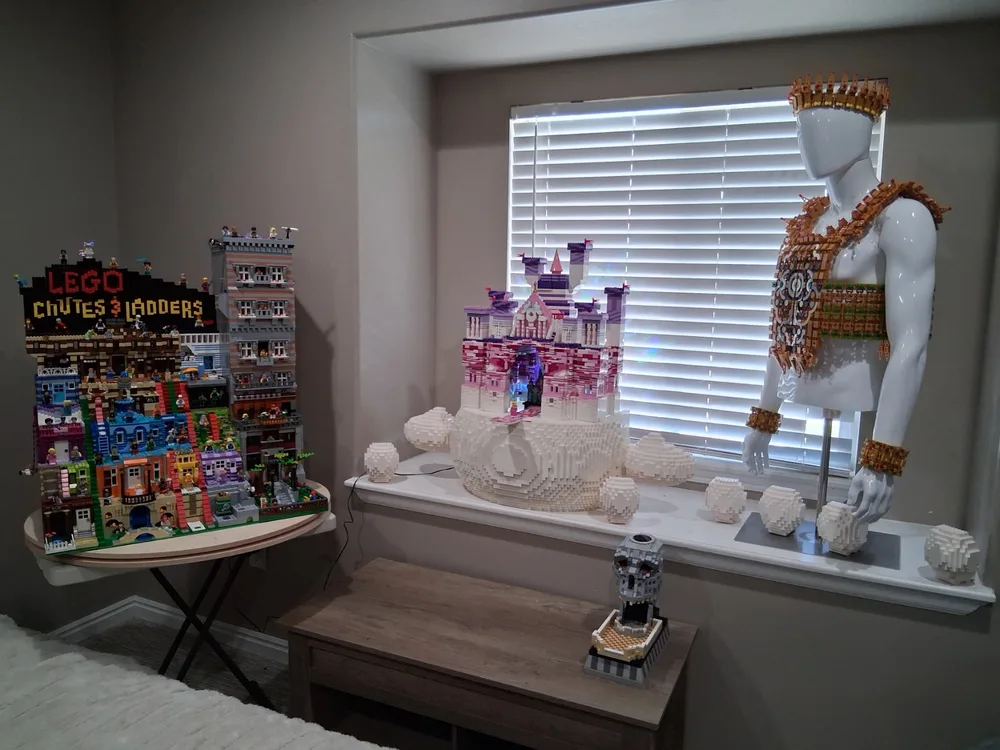
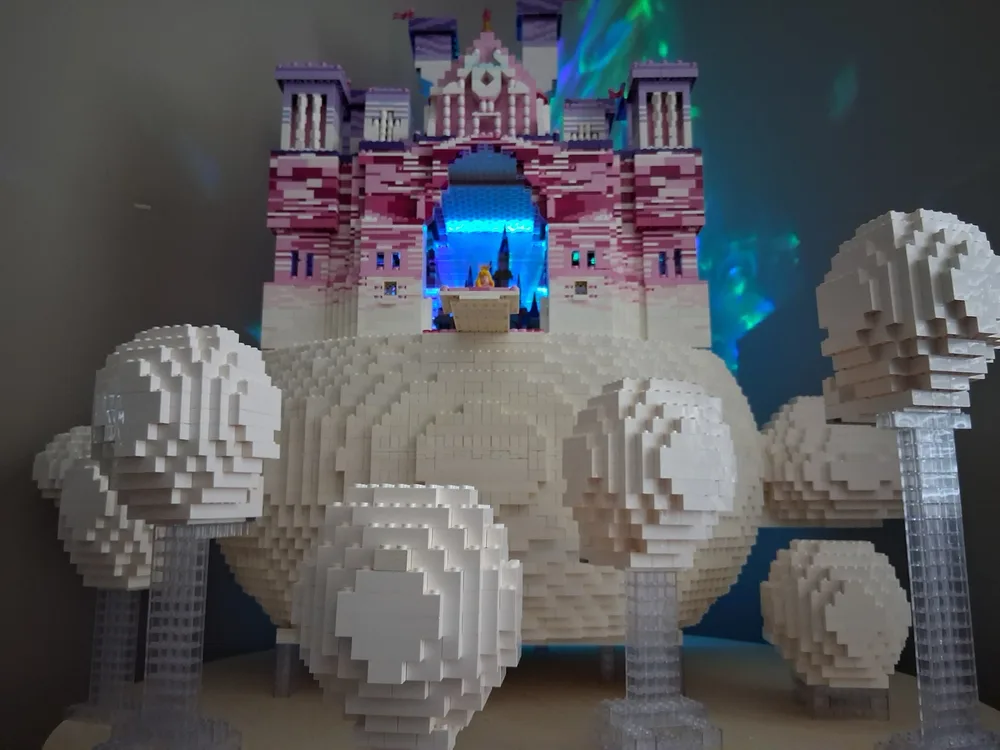
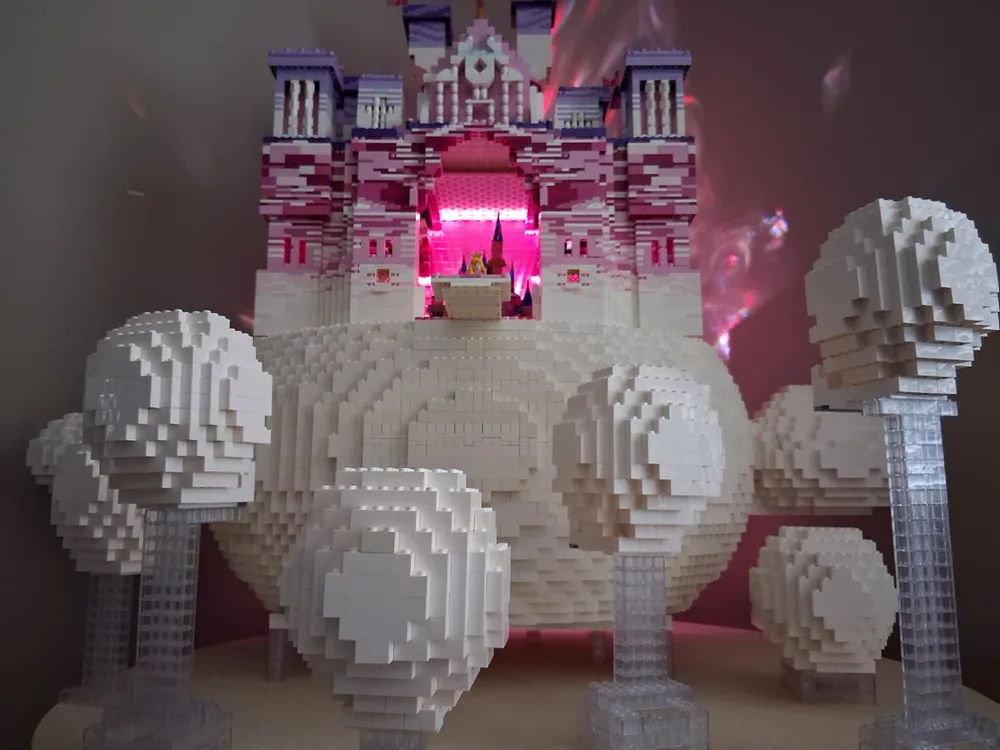
He calls his entry into the public exhibition scene, specifically the Utah event Brickslopes in 2024, the turning point. “Being surrounded by such incredible builders really sets a fire for inspiration,” Michael recalls. Themes like ‘Ye, Old Slopes’ for the 2026 event guided the development of his popular builds like the LEGO King outfit and his reimagined Castle in a Castle on a Cloud.
Of course, these projects did not happen in a vacuum. The artist is quick to credit his dear ones as a driving force. “My tribe of friends and family also play a keen role in what I choose to build,” he notes. This social element is the heartbeat of his process. He builds not just to show off a skill, but to create something that invites others into a shared moment of wonder.
Learning Through Trial and Error
Now a known face in the MOCist space, Michael didn’t start out making perfect models. The transition from building pre-made sets to designing MOCs was a long process of trial and error.
His first real MOC was a massive board game called Muloch and the Army of Dream Destroyers built on a rotating lazy Susan. It was an ambitious attempt at a really complex version of Chutes and Ladders, where players took on the role of a Dream Weaver fighting against Nightmares.
Michael wanted to make something special — something playable. But he learned a tough lesson: if you make the build too complicated, it stops being fun. As he reflects on that early work, he realized that it got in the way of the actual connection he wanted to have with other people. So, he tore it down and rebuilt it until it became a simpler, smoother version of Chutes and Ladders with a built-in dice roller.
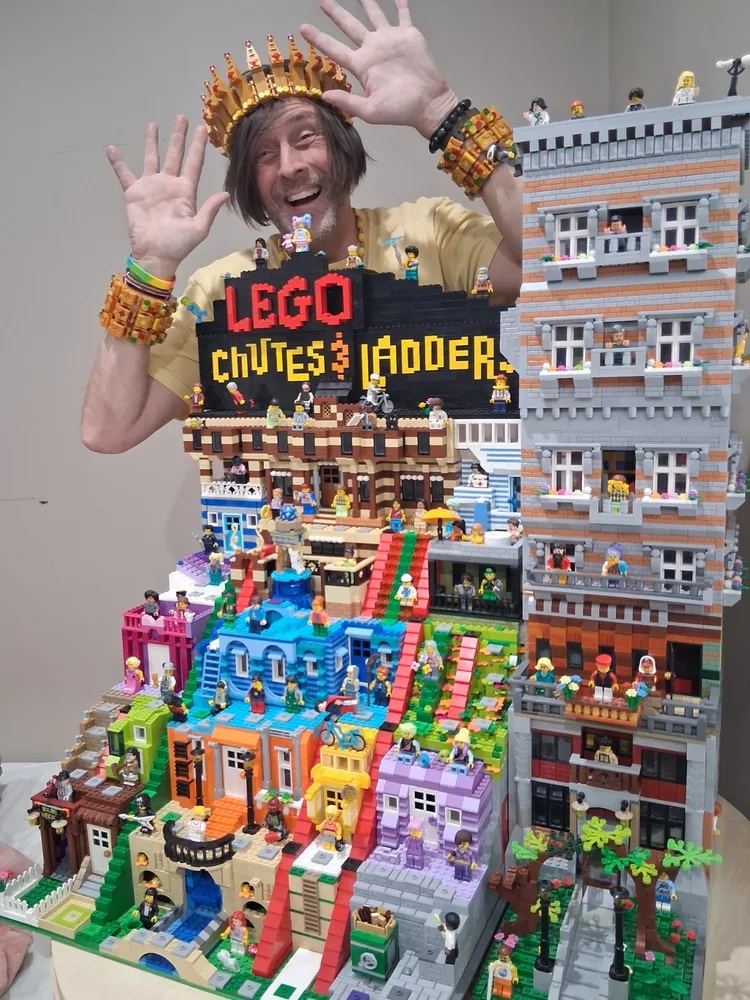
That project has since gone through three full cycles of being dismantled and rebuilt. Each iteration gets Michael closer to his goal of making LEGO a tactile experience for everyone involved. It’s a reminder that sometimes having a big vision doesn’t always translate into a good build. The best thing you can do for such projects is to stop trying to be clever and start being practical.
Over the years, Michael’s been able to find some shortcuts, too. For instance, he uses the Plotz Sphere Generator program (though we’re totally biased toward our own Brick Sculptor) when he’s trying to figure out how to round out his designs. It’s wild to him that you can use square bricks to trick the brain into seeing a rounded shape.
“When I found this, it changed the way that I approached some of my LEGO builds,” he says about the program. “It still blows me away that in the depth of size that I build in that the mind rounds out edges that have these square dimensions.”
The Philosophy of Giving Back
Artist Michael Dimitri Sammann is also careful not to get too wrapped up in his own ego. He’s got this plan — and it’s a big one — to give away all his MOCs to younger hands when he turns 60! He wants to put a little plaque on each one that gives the next person a few tips, and a nudge to pass it on when they hit that same age.
“While my ego ends at the door of transference, my ideas revolve around nurturing possibilities and inspirations,” he explains. Michael likes the idea that these builds aren’t meant to last forever. He’s fully aware that gravity and time will eventually break any build down. That’s why he doesn’t believe in holding onto his work for dear life.
He thinks of it as passing on a flame. If someone wants to break his work down and use the parts to make something brand new, he’s totally fine with that. That’s just the nature of the game, he believes. It keeps him motivated to build things that are worth passing down; Michael enjoys the thought of wondering whose hands might end up with his creations one day.
Getting Through the Wall
When talking about the mental side of being an artist, Michael says he doesn’t believe in being stuck in a rut. If he hits a wall on a build — maybe he’s waiting for a specific part to arrive or just doesn’t like how it’s turning out — he just shifts gears. He’s usually working on about three things at once anyway.
The LEGO artist doesn’t feel a need to force a result if the passion isn’t there in the moment. If he’s not feeling the bricks at all or needs a break, he simply goes for a hike in the Utah mountains, listens to music, or throws a theme party.
He’s also got 3D printing and performance poetry to turn to. It’s all just one big flow of creativity to him, where doing something else than brick-building is like changing a current, not avoiding a limbo. Perhaps this is also the reason he never sticks to a specific theme or building style.
When something piques his interest, he tries and researches building styles to materialize his vision. “Sometimes I will draw out what I ultimately want to create, and at times I will preplan much of a build and necessary pieces even before I touch a LEGO,” Michael says.
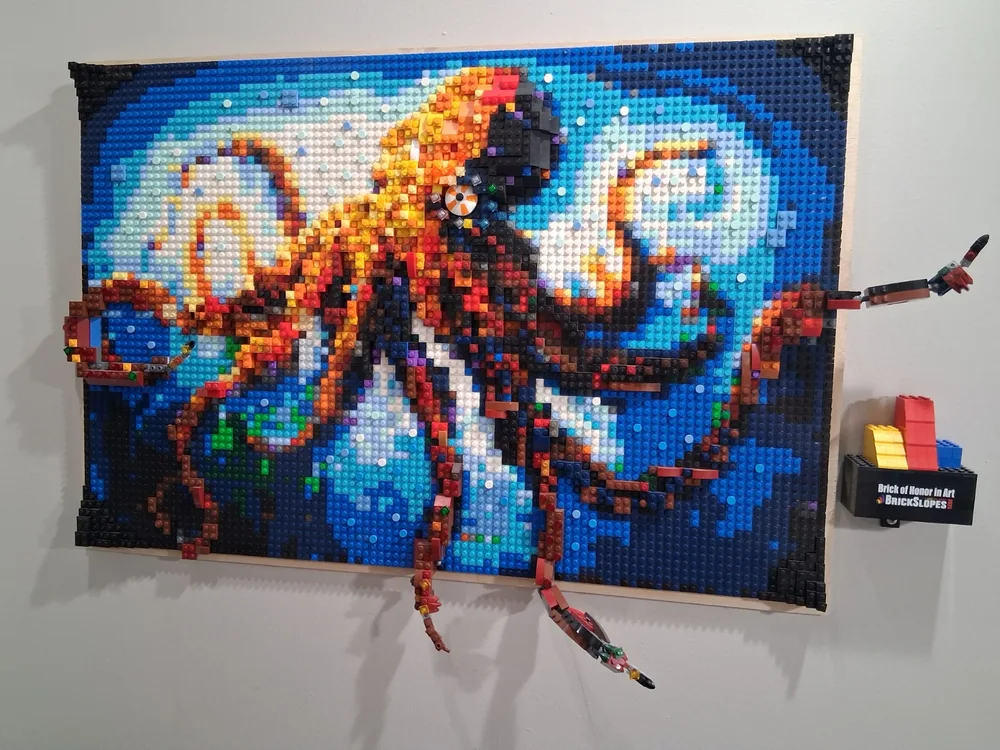
The artist also says he would love a consistent supply of regular 2x4 bricks. At the size of builds that he generally creates, he calls them the ‘bread and butter’ of a build.
Advice for Newbies and Fellow Builders
If you’re intimidated by the prospect of building your first MOC, Michael calls the feeling a natural response. But, he believes the barrier to entry is more internal than practical.
The artist encourages people to take care of their own mental health and keep their need for external validation in check. “As we get older, life has its demands, and it can be easy to forget that we must address where intimidation comes from,” he says.
People struggle to start because they worry too much about what others are going to say. Michael thinks you have to let that go. Once you drop the pressure to meet someone else’s expectations, the path becomes much clearer. You can then start building from the heart and tap into what your passion wants you to accomplish. If that’s LEGO, the tools to craft a MOC will always be there.
Regarding the technical side, Michael believes every builder should know how to overlap, interlock, and layer bricks, especially in 30+ lb builds. You can’t just rely on the hope that it will stay together. You must understand how the internal skeleton supports the outer facade.
“I, personally, have to force myself to slow down, and take into consideration the structural integrity so that parts don’t collapse while carrying the entire build from one place to another,” he admits.
Looking Ahead
It’s easy to look at the big, impressive builds Michael displays at shows and think he’s a guy who knows how to put bricks together. But really, he’s just a guy who likes the process of staying in motion.
Michael likes his treadmill, the sorting, the music, the Netflix shows, and the people he meets along the way. He isn’t trying to leave behind a monument. He just wants to put something good out into the world, so someday, someone else can pick up the baton and have a good time with it.
The artist is playing with his bricks, sure, but he’s doing it with a real sense of purpose. That, to him, is what LEGO is for. It’s a shared language, and Michael Dimitri Sammann is just happy to be part of the conversation.
He’s also optimistic about the current state of the community. He thinks of shows like LEGO Masters as a positive force, not only because they make the hobby look cool, but also because they highlight what’s possible when people really push their limits.
Michael’s LEGO journey is all about using bricks to build connections. The goal is simple: build with joy and share that joy with others. The size of the build doesn’t matter. It’s all about the process of showing up for yourself, staying in motion, and being willing to let go of your work so that it can inspire someone else.